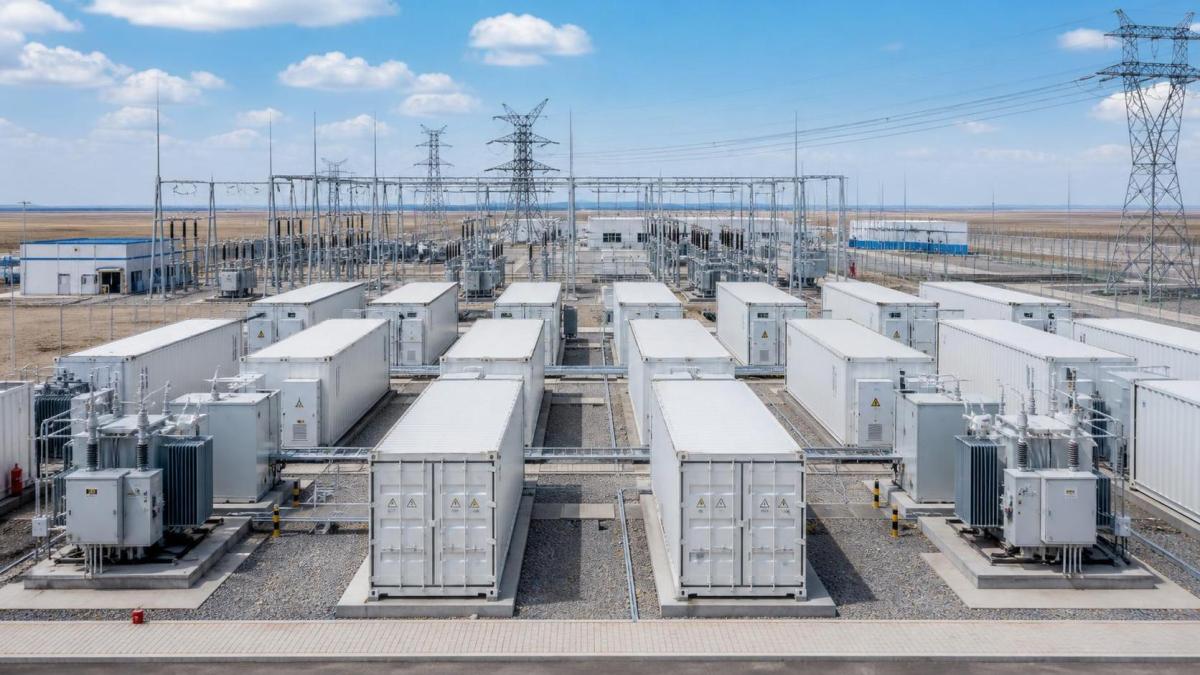
What drives utility-scale energy systems cost the most?
auth.Dr. Liang CheTime
Aug 16, 2026Click Count
For enterprise buyers and project teams, utility-scale energy systems cost is rarely defined by the price tag on a solar module, battery rack, or transformer. Those line items matter, but they are only the visible layer. The real economics are shaped by what happens around the equipment: the site, the grid, the permitting path, the interconnection queue, the quality of engineering, and the discipline of execution. That is why two projects with similar nameplate capacity can land at very different total costs—and why procurement teams often discover that the “cheapest” option is not the least expensive one over the life of the asset.
In utility-scale development, cost pressure comes from both sides. Upfront capital must be controlled, but so must long-term performance. If a system underperforms, curtailment, downtime, degradation, or compliance delays can quietly erode returns. For decision-makers evaluating solar, ESS, hybrid plants, or grid-facing infrastructure, the most useful question is not “What does the equipment cost?” but “What drives total project cost up or down before the asset even starts earning?”
One of the biggest cost drivers is grid interconnection. In many markets, interconnection is no longer a formality; it is a project-defining variable. The point where a plant connects to the network can require upgrades to substations, protection systems, transformers, communications, and sometimes transmission assets well beyond the project fence. Studies, utility reviews, and redesign cycles can extend timelines and add engineering cost long before construction begins. For enterprise teams, this means the grid should be treated as part of the project design, not as a late-stage administrative step.
Permitting and compliance create another layer of cost that is easy to underestimate. Utility-scale energy systems operate in a landscape shaped by electrical codes, fire safety rules, environmental constraints, import standards, and local planning approvals. A battery project, for example, may need a more demanding safety architecture than a simple generation asset, especially where thermal management, emergency response planning, and equipment spacing are involved. When compliance is handled early, teams can avoid redesigns, resubmittals, and procurement changes that tend to inflate budgets in a very unhelpful way.

Engineering quality also has a direct effect on utility-scale energy systems cost. A strong design package reduces rework, simplifies EPC coordination, and makes equipment selection more consistent across vendors. A weak one does the opposite. Small mistakes in cable routing, protection coordination, thermal assumptions, or foundation design can create disproportionate cost increases during procurement and construction. This is especially true for hybrid systems, where PV, storage, monitoring, and grid controls must work as a single operating environment rather than as separate products stitched together at the end.
Equipment specification is another area where cost can be misunderstood. Decision-makers often focus on unit price, but the more relevant figure is installed and operational value. In PV, module efficiency, durability, and degradation profile influence both land-use efficiency and long-term output. In ESS, chemistry choice, cooling method, cycle life, and controls strategy influence not just capex, but maintenance intensity and replacement timing. A lower-priced component may look attractive during procurement, yet create a higher lifecycle burden through earlier degradation or reduced operating flexibility.
Site conditions matter more than many early estimates admit. Terrain, soil conditions, drainage, seismic requirements, weather exposure, and access roads all influence civil works and construction logistics. Remote sites can increase transport and labor costs. Difficult soil can raise foundation expense. Hot environments may push systems toward more robust cooling or enclosure strategies. These are not minor details; they are the physical realities that determine how much of the budget disappears into non-equipment work before the first kilowatt-hour is delivered.
Construction execution often becomes the point where abstract cost assumptions become very real. EPC performance depends on schedule control, subcontractor coordination, quality assurance, and the ability to adapt when conditions change. Delays can trigger idle labor, extended equipment storage, contract penalties, and financing pressure. For utility-scale assets, time is not only money in the usual sense; it also affects revenue start dates, offtake commitments, and lender confidence. Strong project controls are one of the least glamorous ways to protect utility-scale energy systems cost, but also one of the most effective.
Long-term operations and maintenance deserve equal attention. The cheapest asset to build is not necessarily the cheapest to run. Maintenance access, spare parts strategy, monitoring architecture, firmware support, and warranty alignment all influence the total cost of ownership. A well-designed SCADA and diagnostics layer can reduce truck rolls and identify faults earlier. Poor visibility, by contrast, leads to reactive maintenance and avoidable losses. In enterprise settings, O&M is not a back-office issue; it is part of the financial model.
Financing conditions can also change the economics significantly. Interest rates, debt terms, insurance requirements, and lender technical due diligence all affect project cost. A project with stronger engineering documentation, clearer performance assumptions, and lower execution risk often secures better financing treatment than a less certain one. That means technical integrity is not just an engineering virtue—it can influence the cost of capital.
For buyers comparing suppliers or project options, a practical approach is to separate cost into four buckets:
- Front-end development cost: interconnection, permitting, studies, and design work
- Procurement and EPC cost: equipment, logistics, civil works, installation, and commissioning
- Operating cost: maintenance, replacements, monitoring, and service support
- Risk cost: delays, redesigns, non-compliance, underperformance, and financing penalties
That framework helps teams move beyond quote comparison and toward project evaluation. It also makes supplier discussions more productive. Instead of asking only whether a system is “competitive,” decision-makers can ask where the project is likely to face hidden cost exposure and what evidence supports the design assumptions behind the proposal.
In practice, the projects with the strongest economics are usually the ones where the technical choices are consistent from day one. Site studies, equipment benchmarking, standards alignment, and lifecycle thinking all reduce the chance of expensive surprises. This is exactly where data transparency matters. When teams compare PV modules, ESS architectures, grid equipment, or hydrogen-ready infrastructure against recognized standards and real engineering constraints, they make better procurement decisions—and avoid paying for uncertainty later.
Utility-scale energy systems cost is driven most heavily by the parts of the project that are hardest to see at the procurement stage: grid integration, compliance, engineering quality, execution discipline, and long-term reliability. Equipment price matters, but it is only one part of the equation. For enterprise leaders, the real advantage comes from understanding which variables create compounding cost—and controlling them before they become irreversible.
Recommended News
- 00
0000-00
Do high performance spark plugs improve acceleration in daily driving?High performance spark plugs: discover when they improve daily-driving acceleration, restore smooth response, and deliver reliable ignition performance. - 00
0000-00
How Foldable screen technology limits crease growth over timeFoldable screen technology limits crease growth through advanced hinges, layered materials, strain control, and reliable durability testing. Explore what makes foldable displays last longer. - 00
0000-00
What drives price differences in bulk laminated safety glass?Laminated safety glass bulk pricing explained: compare interlayers, fabrication, certifications, packaging, and landed costs to source safer, higher-value glass.
000000-00
{item.title}{item.description}Search News
Industry Portal
Hot Articles
- What to verify before choosing a hydrogen storage tank supplierHydrogen storage tank supplier checklist: verify pressure ratings, certifications, traceability, safety controls, delivery capability, and lifecycle value before you buy.
- When can a V2G charger for utilities reduce peak-load costs?V2G charger for utilities: discover when localized EV fleets can cut peak-load costs, defer grid upgrades, and deliver reliable, dispatchable flexibility.
- When hydrogen energy systems make sense for long-duration backup powerHydrogen energy systems for backup power deliver resilient multi-day autonomy, low local emissions, and reliable continuity when batteries or diesel fall short.
Popular Tags