China Expands Onshore-Currency Pooling for Multinationals, Supporting ESS and Charger Exports
auth.Dr. Elena VoltTime
Aug 15, 2026Click Count
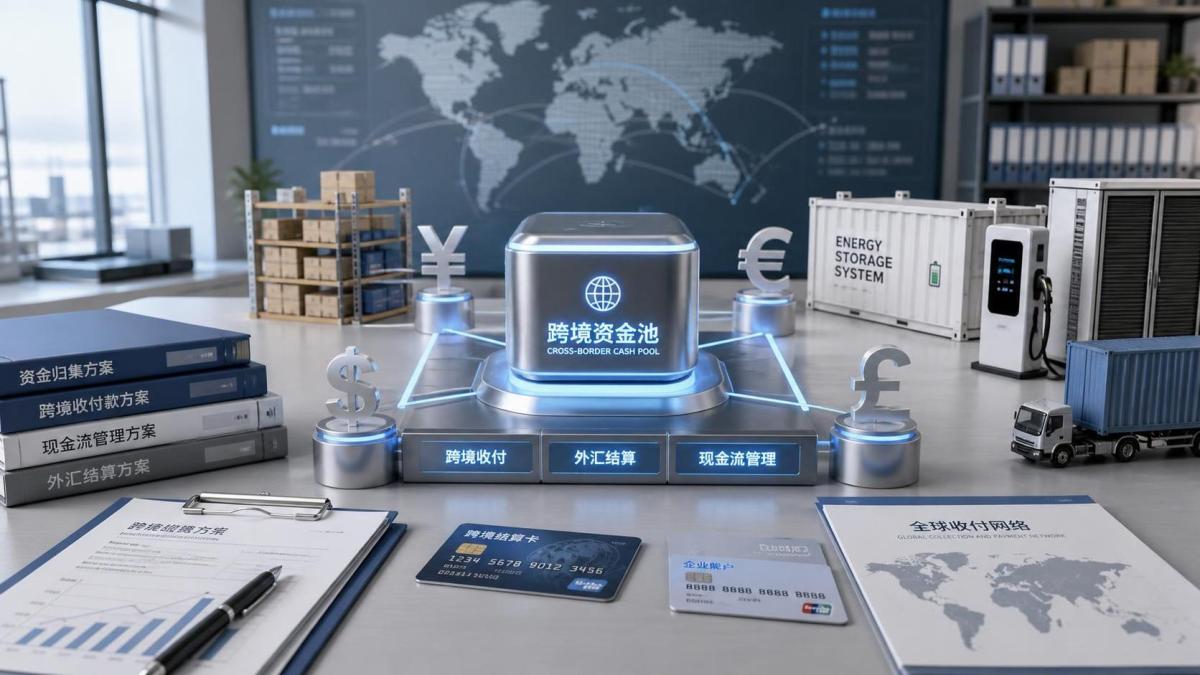
China’s central bank and foreign exchange regulator have issued a notice that will, from September 14, 2026, implement nationwide cross-border centralized treasury operations for multinational companies. For exporters of higher-value energy equipment, the policy may matter less as a broad macro headline and more as a practical financing and settlement change.
The most immediate impact is likely to be operational. Businesses involved in C&I ESS solutions, DC fast-charging equipment and V2G technologies often handle overseas distributors, project EPC contractors and staged payment cycles. A nationwide onshore and foreign-currency funding pool can simplify cross-border collections and payments, improve internal cash allocation, and reduce the friction of moving funds between entities and jurisdictions.
In practice, that should help companies respond more quickly to receivables timing differences and working-capital pressure. When export orders are tied to overseas channel partners or project delivery milestones, treasury centralization can make it easier to offset surplus and shortage across group entities rather than managing each account in isolation. It may also lower exposure to exchange-rate swings by giving treasuries more room to manage currency positions at the group level.

For energy-storage and charging-equipment exporters, this kind of policy usually does not change product competitiveness on its own. But it can improve the financial mechanics behind export growth, especially for companies with multiple subsidiaries, overseas business units or mixed domestic and foreign-currency cash flows. That is particularly relevant where settlement terms are long and project execution depends on steady liquidity.
From the current information, the key point is not a new market opportunity being created overnight, but a more efficient settlement and fund-management framework for multinationals operating across borders. Market participants will likely watch how quickly companies adopt the new arrangement, and whether banks and treasury platforms can support it smoothly in day-to-day use.
What still matters is execution. The policy’s practical value will depend on how companies structure their internal cash pools, how they manage foreign-exchange risk under the new rules, and whether the process meaningfully shortens payment cycles for overseas customers and project counterparties. Those details will determine whether the benefit stays at the policy level or shows up in operating cash flow.
Note: This article is based solely on the information provided in the current news brief and is intended as an industry-information interpretation of that event.
Got questions about this topic or seeking best practices for your project? Drop us a line below, and let Hengda Engineering's experts help you out.
Recommended News
- 00
0000-00
Australia’s NEM Battery Storage Reaches Record 20.17 GWh, Up 203% Year on YearAustralia’s NEM battery storage reached 20.17 GWh, up 203% year on year. Explore what record growth and rising curtailment mean for grid scheduling. - 00
0000-00
World's Largest 60 MW Liquid Air Energy Storage Project Connected to GridThe world's largest 60 MW liquid air energy storage project connects to the grid in China. Discover its 10-hour capacity and potential for clean power. - 00
0000-00
BNEF Raises US Energy Storage Forecast 30% as Data Center Orders MaterializeUS energy storage forecasts rise 30% as data center orders materialize. Explore BNEF's deployment outlook through 2036 and what it means for the market.
000000-00
{item.title}{item.description}Search News
Industry Portal
Hot Articles
- Portugal Launches Tenders for 1,050 MVA of Battery Storage CapacityPortugal battery storage tenders offer 1,050 MVA of grid capacity, including 750 MVA for standalone projects. Explore the opportunity and key details to verify.
- How grid stability modeling assesses the impact of low inertiaDiscover how grid stability modeling evaluates low inertia, frequency risks, and resource responses to guide reliable, effective mitigation decisions.
- Australia’s NEM Battery Storage Reaches Record 20.17 GWh, Up 203% Year on YearAustralia’s NEM battery storage reached 20.17 GWh, up 203% year on year. Explore what record growth and rising curtailment mean for grid scheduling.
Popular Tags