How Sustainable Construction Reduces Lifecycle Costs in Commercial Projects
auth.Dr. Liang CheTime
Aug 13, 2026Click Count
In many commercial projects, the budget problem does not start with the construction quote. It shows up later, when utility bills are higher than expected, equipment needs more attention than planned, and small repairs keep interrupting operations. At that point, the project is already built, and every adjustment is more expensive than it would have been during design.
That is why sustainable construction often becomes a procurement question, not just a design preference. If you are comparing options for an office building, logistics facility, campus, or mixed-use asset, the real issue is usually lifecycle cost: what the building will demand after handover, not only what it costs to finish.
Where lifecycle costs usually get out of control
People often look at first cost and assume the cheapest bid is the safest path. In practice, commercial buildings tend to accumulate cost in a few familiar places. Poor envelope performance drives heating and cooling loads. Low-durability finishes increase replacement frequency. Oversized or poorly coordinated mechanical systems create maintenance headaches. And if power systems are not planned with future electrification in mind, upgrades can become disruptive later.
Sustainable construction reduces pressure in these areas by making the building easier to operate, maintain, and adapt. That does not mean choosing every “green” option available. It means selecting materials, systems, and layouts that reduce waste over time and match how the building will actually be used.
Start by separating upfront cost from operating burden
When teams evaluate sustainable construction, the first mistake is treating it as a premium add-on. A better way is to ask which parts of the project create recurring cost. For example, does a material need frequent repainting or replacement? Will the lighting layout force higher energy use during long occupied hours? Are service zones easy to access, or will every maintenance task require extra labor and downtime?
Once you frame the project this way, the comparison changes. A slightly higher-performing system may be easier to justify if it lowers maintenance complexity, improves energy intensity, or extends replacement intervals. That is especially relevant in commercial projects where downtime affects tenants, operations, or service commitments.
What usually makes the biggest difference
The savings rarely come from one dramatic feature. They come from a set of practical decisions that reinforce each other.
Durable materials matter because replacement is expensive in commercial environments. If a surface wears out quickly, the direct cost is only part of the problem; access, labor coordination, and operational disruption often cost more than the material itself.
Energy-efficient envelopes and daylight-aware design help reduce heating, cooling, and lighting loads. That becomes more valuable when the building operates for long hours or under variable occupancy. Smart controls can help, but only if the underlying design is simple enough to tune and maintain.
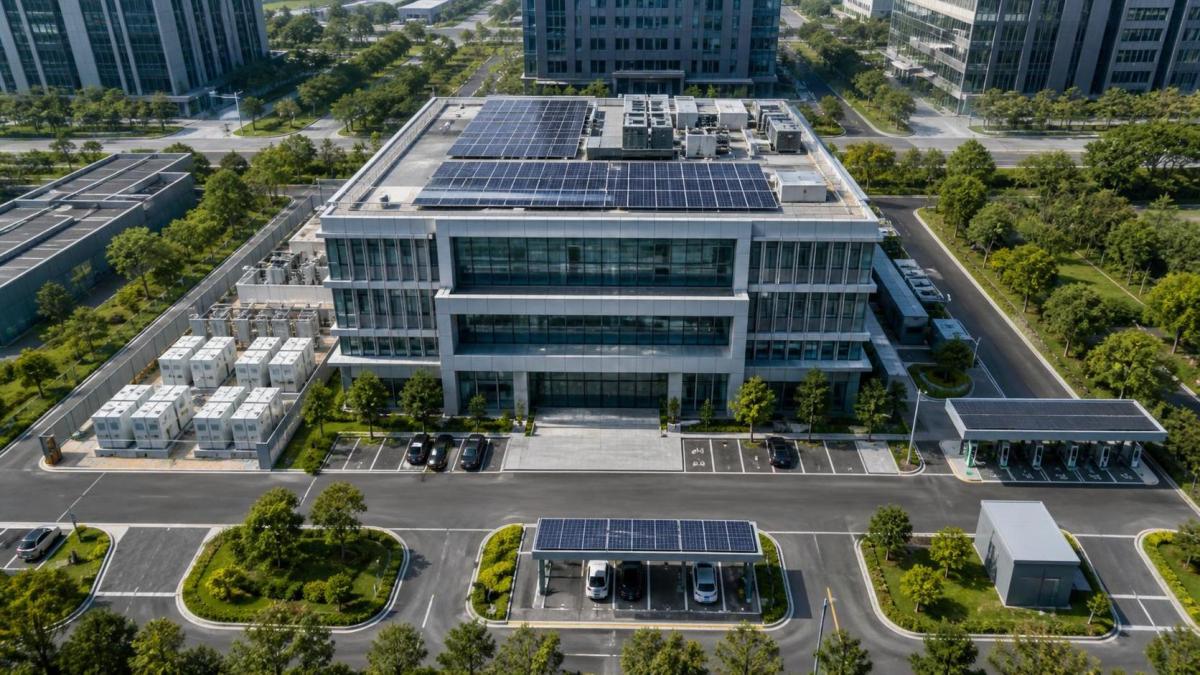
Power integration is another area where sustainable construction affects lifecycle cost. Buildings that plan for electrification, storage, EV charging, or site-level power management are often easier to adapt later. In that sense, coordination with broader energy infrastructure is part of cost control, not just an engineering detail.

Questions to ask before choosing a concept or supplier
If you are in the procurement stage, it helps to ask practical questions instead of broad ones. For instance: Which components are most likely to require replacement first? How easy is access for inspection and maintenance? What happens if occupancy patterns change? Can the electrical and mechanical design support future upgrades without major rework?
These questions are useful because they expose hidden cost. A proposal that looks efficient on paper may still create expensive obligations if it depends on specialized maintenance, complicated controls, or hard-to-source components. Sustainable construction should reduce dependency, not create a new one.
For projects tied to modern energy goals, it is also worth checking whether the design can accommodate PV systems, energy storage, or improved grid interaction later. Even if those elements are not installed immediately, planning for them early can avoid structural and electrical redesigns down the line. In projects where power resilience matters, that flexibility can be part of the lifecycle-cost case.
A simple way to evaluate options
When comparing alternatives, use a short decision path:
- Estimate how each option affects energy demand during normal operation.
- Compare expected maintenance effort, access, and replacement frequency.
- Check whether the design supports future changes without major demolition or rewiring.
- Look at material durability in the real operating environment, not just the spec sheet.
- Review whether the power and controls strategy is practical for facility teams to run.
This approach is useful because it keeps the discussion focused on cost over time. It also makes it easier for owners, designers, and procurement teams to stay aligned. If an option saves money at handover but adds recurring complexity, it is not really a lower-cost option.
Common mistakes that weaken the business case
One common mistake is overvaluing isolated features while ignoring system interaction. A high-efficiency component can still underperform if the building envelope, controls, or maintenance plan are weak.
Another is choosing materials that are technically sustainable but operationally awkward. If a product is difficult to clean, repair, or replace, the facility team may end up spending more than expected.
There is also a tendency to delay infrastructure planning until later phases. In commercial projects, that often leads to expensive change orders. Sustainable construction works best when electrical capacity, equipment access, and future load growth are considered early, especially in buildings that may later support storage, charging, or more advanced power management.
When to bring in technical review
If the project is large, has complex power demands, or involves multiple stakeholders, it helps to get a technical review before final procurement. That review should not be a sales presentation. It should test whether the proposed design is realistic for the building’s operating profile, maintenance capacity, and long-term upgrade path.
This is also where data-driven engineering support can be useful. Teams such as G-EPI, which focus on cross-sector energy and power infrastructure, can help benchmark how PV systems, ESS, smart grid interfaces, and related hardware fit into broader project planning. The value is not in pushing a product; it is in checking whether the technical foundation supports the cost goals the project is trying to meet.
In the end, sustainable construction reduces lifecycle costs when it is treated as a way to remove recurring waste, not as a branding exercise. If you evaluate materials, systems, and power planning from the start, you give the building a better chance to stay efficient, serviceable, and adaptable over time.
Recommended News
- 00
0000-00
Do high performance spark plugs improve acceleration in daily driving?High performance spark plugs: discover when they improve daily-driving acceleration, restore smooth response, and deliver reliable ignition performance. - 00
0000-00
How Foldable screen technology limits crease growth over timeFoldable screen technology limits crease growth through advanced hinges, layered materials, strain control, and reliable durability testing. Explore what makes foldable displays last longer. - 00
0000-00
What drives price differences in bulk laminated safety glass?Laminated safety glass bulk pricing explained: compare interlayers, fabrication, certifications, packaging, and landed costs to source safer, higher-value glass.
000000-00
{item.title}{item.description}Search News
Industry Portal
Hot Articles
- Do high performance spark plugs improve acceleration in daily driving?High performance spark plugs: discover when they improve daily-driving acceleration, restore smooth response, and deliver reliable ignition performance.
- How IEC Standards global requirements affect grid monitoring IoT deploymentIEC Standards global requirements shape reliable grid monitoring IoT deployment. Explore interoperability, cybersecurity, compliance evidence, and lifecycle controls for resilient utility systems.
- How Foldable screen technology limits crease growth over timeFoldable screen technology limits crease growth through advanced hinges, layered materials, strain control, and reliable durability testing. Explore what makes foldable displays last longer.
Popular Tags