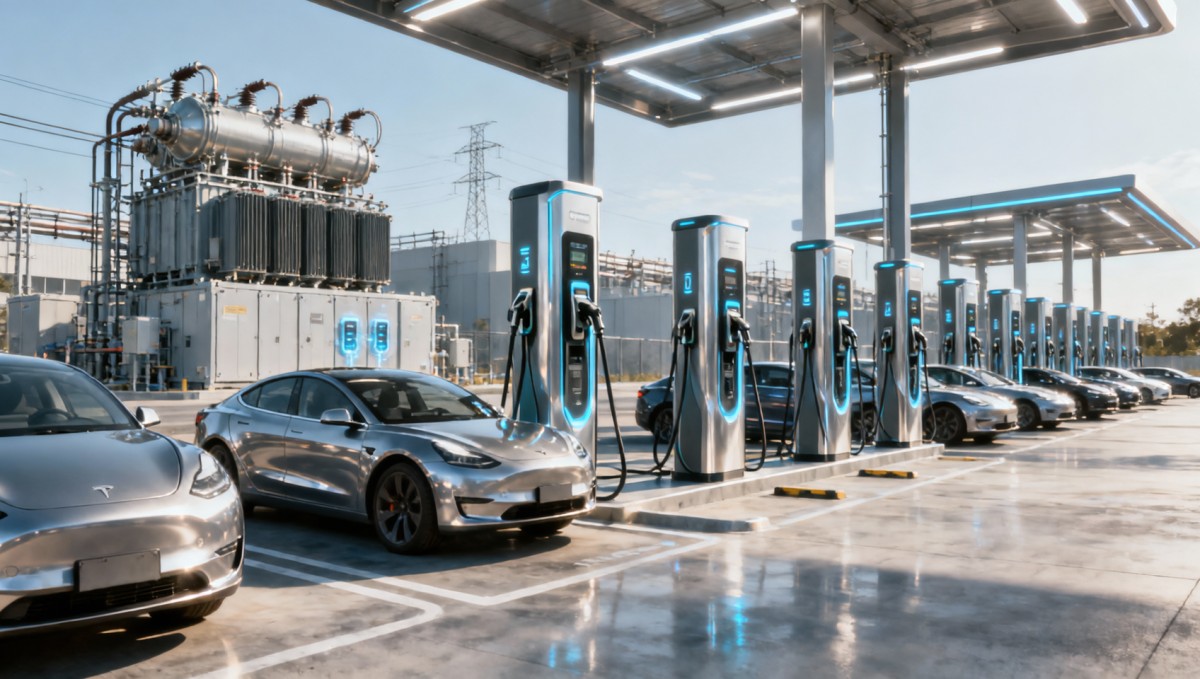
Fast charging reliability drops when demand spikes
auth.Marcus WattTime
Apr 17, 2026Click Count
When fast charging demand spikes, reliability often drops not because one component fails, but because several systems hit their limits at the same time: charger power electronics, transformer loading, battery thermal behavior, site energy storage dispatch, and local grid stability. For operators and researchers, the key takeaway is clear: unreliable ultra-fast charging is usually a system-design problem, not just a charger problem. The most useful way to assess risk is to examine what happens during peak concurrency—when many vehicles arrive together, state of charge is low, ambient temperatures are high, and upstream grid conditions are already stressed.
Searchers looking into this topic usually want answers to practical questions: why charging performance becomes inconsistent during busy periods, which technical bottlenecks are most responsible, how energy storage and liquid cooling ESS can help, and what indicators distinguish a robust site from one that only performs well in ideal conditions. For information researchers and site operators, the most valuable content is not a generic explanation of EV charging, but a clear framework for diagnosing weak links across energy hardware, grid interface, transformers, smart controls, and renewable integration.
The central judgment is this: if a fast charging site is designed around nameplate power instead of peak-duty reliability, demand spikes will expose hidden constraints. The best-performing sites combine correctly sized transformers, high-quality power conversion equipment, active load management, thermal-aware charger design, and where appropriate, battery-buffered architecture tied to resilient grid strategy. That is where reliability gains become measurable.
Why fast charging reliability drops during peak demand

Under normal conditions, a fast charging station may appear fully capable of delivering advertised power. But during periods of high utilization, the site transitions from a simple charging asset into a dynamic power system. At that point, reliability is influenced by three layers simultaneously: the vehicle-charger interaction, the station’s internal electrical architecture, and the upstream grid connection.
Several failure modes become more common when demand surges:
- Power sharing constraints: Many DC fast charging sites allocate power dynamically across stalls. If multiple vehicles connect at once, each dispenser may receive less than its rated output.
- Transformer and feeder stress: Local transformers, switchgear, and conductors may approach thermal or capacity limits, forcing derating or protection events.
- Charger thermal derating: Ultra-fast DC chargers generate significant heat in power modules, cables, and connectors. In hot weather or sustained high-throughput operation, the equipment may reduce output to protect itself.
- Voltage instability and power quality issues: Weak grids or heavily loaded distribution systems can produce voltage sag, harmonic distortion, or unstable operating conditions that reduce charger performance.
- Battery-side limitations: Even when the charger is available, the EV battery itself may taper earlier than expected due to temperature, chemistry, or state-of-charge conditions.
This is why the user experience can degrade suddenly during busy periods. The charger may still be online, but charging speed becomes inconsistent, queue times rise, sessions fail more often, and throughput per hour declines. From an operational perspective, this is still a reliability issue, because the station is no longer delivering dependable service at the moment demand is highest.
What operators and researchers should evaluate first
For target readers such as information researchers and charging operators, the most important question is not whether a charger can reach its maximum power briefly, but whether the entire site can sustain dependable output across peak concurrency. That requires looking beyond headline kW ratings.
Start with these evaluation points:
- Concurrent load performance: How many vehicles can charge simultaneously before average delivered power drops materially?
- Session success rate at peak hours: Reliability should be measured during the busiest time windows, not averaged across the day.
- Thermal stability: Does the charger maintain output after repeated high-power sessions, especially in high ambient temperatures?
- Grid interconnection strength: Is the site located on a robust feeder, or does it depend on a constrained local distribution network?
- Transformer utilization margin: A site operating too close to transformer limits is more vulnerable to derating and failure.
- Power electronics quality: Rectifiers, cooling systems, cable assemblies, and control firmware all affect high-demand stability.
- Load management intelligence: Smart sequencing, prioritization, and dynamic balancing can materially improve throughput.
These criteria are far more useful than vendor marketing claims alone. A station that performs slightly below top speed in ideal conditions but remains stable during demand spikes is usually more valuable than one that advertises higher peak output but collapses under real-world traffic.
How ESS and liquid cooling ESS improve charging reliability
Energy Storage Systems are increasingly important in EV charging infrastructure because they act as a buffer between variable charging demand and constrained grid supply. When fast charging demand surges, an ESS can discharge quickly to support the chargers, reducing stress on the transformer and smoothing the power draw seen by the grid.
This architecture helps in several ways:
- Peak shaving: ESS supplies part of the charging load during high-demand intervals, lowering maximum grid import.
- Reduced transformer overload risk: By limiting sudden demand spikes, ESS helps keep transformer loading within acceptable bounds.
- Improved power quality support: Advanced systems can respond rapidly to transient events and help stabilize site operation.
- Capacity deferral: In some locations, battery storage can delay costly grid upgrades while maintaining acceptable service levels.
- Renewable integration: ESS can store on-site PV generation and use it strategically during charging peaks.
Liquid cooling ESS is especially relevant for high-cycle, high-power sites. Compared with less advanced thermal approaches, liquid-cooled systems generally offer better temperature uniformity, improved thermal management under heavy cycling, and more stable performance in demanding environments. For operators evaluating utility scale or mobility-adjacent storage, this matters because thermal control directly affects battery life, safety margins, and dispatch reliability.
However, ESS is not a universal fix. It must be correctly sized for power and energy duration, integrated with charger controls, and matched to actual traffic patterns. A small battery may help shave short peaks but still fail to support sustained surges. The value comes from engineering alignment, not from simply adding storage hardware.
Why grid resilience and transformers matter more than many charging plans assume
One common mistake in fast charging deployment is to treat the charger as the primary asset and the grid connection as a background utility detail. In reality, grid resilience often determines whether a site can maintain service during demand spikes, extreme weather, or broader network disturbances.
Power transformers are a critical part of this picture. If transformer sizing is based only on nominal charger capacity rather than realistic coincidence factors, ambient conditions, and future utilization growth, the site can become constrained long before demand forecasts are fully realized. Repeated high loading can also accelerate thermal aging and increase maintenance risk.
Researchers and operators should pay attention to:
- Transformer thermal headroom
- Distribution feeder constraints
- Voltage regulation performance under step load changes
- Protection coordination with fast-ramping charger loads
- Resilience during upstream disturbances or renewable variability
In regions with growing renewable integration, the interaction becomes even more important. Solar PV, battery storage, smart grid controls, and EV charging can work together effectively, but only if the site is designed as part of a coordinated power system. Otherwise, the addition of high-power charging may amplify existing grid weakness instead of supporting electrification goals.
How to identify whether a site is engineered for real peak-duty operation
For practical decision-making, operators and researchers need a simple way to tell whether a fast charging site is likely to remain reliable when demand spikes. The best indicator is evidence of performance under stress, not brochure specifications.
Look for these signs of a robust design:
- Documented peak-hour performance data rather than only single-session maximum kW figures
- Thermal management designed for sustained duty cycles, including cable and cabinet cooling effectiveness
- Integrated ESS strategy where grid constraints justify buffering
- Transformer and switchgear sized for growth, not just initial commissioning load
- Smart power allocation software that maximizes throughput instead of first-come, first-served inefficiency
- Compliance with recognized standards and transparent engineering benchmarks tied to IEC, UL, or IEEE frameworks
- Maintenance and monitoring systems that track failures, derating events, and power quality anomalies in real time
By contrast, warning signs include frequent charger derating in warm conditions, unexplained power drops during busy periods, high session interruption rates, overloaded site transformers, and storage systems that are too small or too slow to provide meaningful support.
For infrastructure planners, this is also where lifecycle economics matter. A site that avoids costly grid upgrades upfront but suffers from poor peak-hour reliability may lose revenue, customer trust, and operational efficiency. In many cases, investing earlier in resilient architecture produces better long-term returns.
What this means for the future of high-power charging infrastructure
As EV adoption rises and charging behavior becomes more concentrated around logistics hubs, highway corridors, fleets, and urban fast-charge clusters, demand spikes will become more frequent and more severe. This means charging reliability can no longer be judged only by installed charger count or advertised site capacity.
The next phase of dependable fast charging will be built on system coordination: high-quality DC chargers, resilient transformers, stronger grid interfaces, smart energy management, and well-matched ESS or liquid cooling ESS deployments. In technically constrained regions, this integrated model may be the only practical path to scaling ultra-fast charging without unacceptable performance drops.
For readers evaluating energy hardware, battery storage, or utility scale charging infrastructure, the main lesson is straightforward: demand spikes reveal the true quality of the system. When reliability drops under pressure, the root cause is usually found in poor integration between charging equipment, thermal design, storage support, and grid resilience planning.
In summary, fast charging reliability drops when demand spikes because high-power charging stresses the full electrical ecosystem, not just the charger. The most effective response is to design and assess sites based on peak-duty conditions, with close attention to ESS support, liquid cooling performance, transformer capacity, smart controls, and renewable-ready grid architecture. That is the standard required for dependable, scalable charging in the energy transition.
Recommended News
- 00
0000-00
Which connector do you need for a level 2 charger in North America?Level 2 charger North America guide: choose the right J1772 or NACS connector, check AC adapter compatibility, and avoid costly mistakes before you buy. - 00
0000-00
How many EV chargers does a hotel need for its parking capacity?EV Charging for hotels: discover how to size active ports, plan EV-ready spaces, manage electrical capacity, and create a scalable guest-friendly charging strategy. - 00
0000-00
What OCPP 2.0.1 adds to a charging station’s smart charging capabilityOCPP 2.0.1 charging station capabilities explained: explore smarter load control, EV-aware scheduling, security, and practical validation for reliable charging sites.
000000-00
{item.title}{item.description}Search News
Industry Portal
Hot Articles
- Can AI solutions detect transformer faults before equipment fails?AI solutions can flag developing transformer faults before failure. Discover which warning signs matter, how to assess vendor claims, and what makes predictive maintenance actionable.
- How to tell whether health news is backed by reliable evidenceIs health news backed by reliable evidence? Learn to check sources, spot misleading claims, and understand real benefits and risks before making health decisions.
- Which health innovations help patients manage diabetes at home?Explore health innovations for managing diabetes at home, from glucose monitors to connected insulin pens. Compare benefits and daily demands to find tools that fit your care needs.
Popular Tags