China Adds PV Trackers to Export Inspection
auth.Dr. Liang ChenTime
Aug 14, 2026Click Count
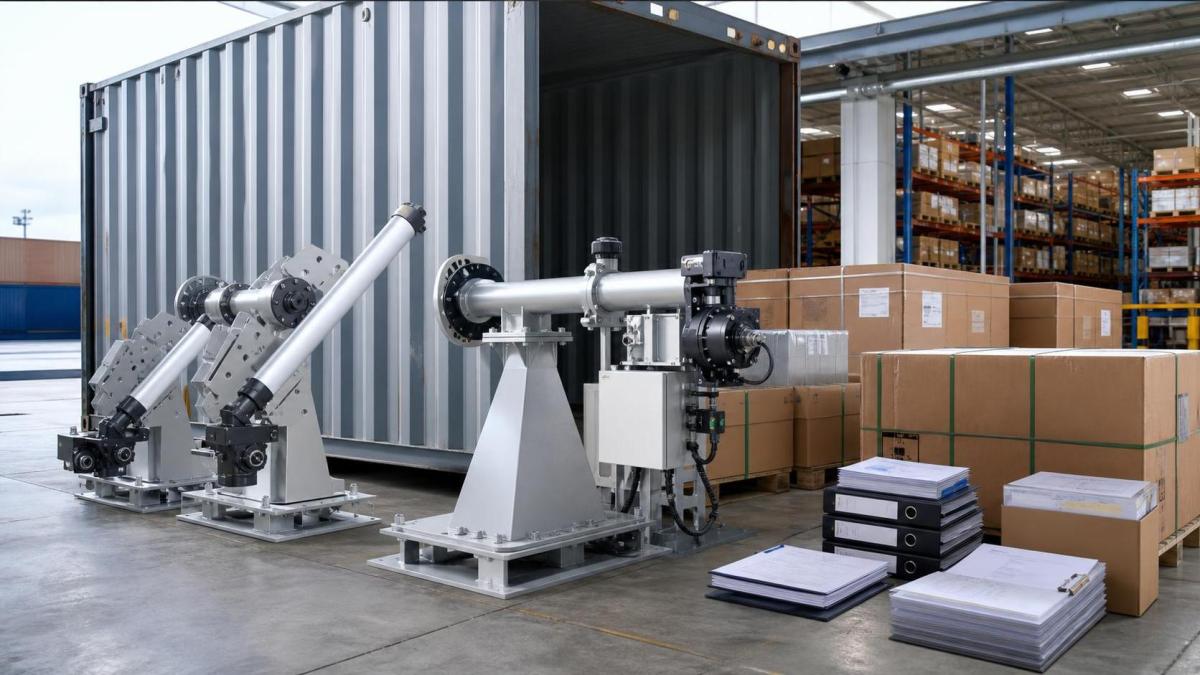
On 2026-08-15, China Customs moved solar tracking systems, including single-axis and dual-axis smart tracking brackets and their supporting control systems, into the Catalogue of Commodities Subject to Mandatory Inspection for imports and exports. For exporters, EPC contractors, project developers, and distributors sourcing from China, the immediate issue is not just compliance paperwork, but how statutory inspection and conformity marking will affect shipment timing, customs clearance, and the alignment of technical documents with CE-EMC/LVD, UL 3703, and IEC 62817 requirements.

What the customs change now means in practice
The confirmed fact is straightforward: from 2026-08-15, solar tracking systems covered by the announcement are subject to statutory inspection before export, and conformity marking must be applied. That places this product category under a more formal pre-shipment compliance gate than before.
For cross-border transactions, this matters because the inspection step sits directly between production completion and export release. Any additional document review, inspection scheduling, or mark application can affect handover timing for cargo moving into overseas EPC and utility-scale PV projects.
Where the pressure will show up first
Exporters and manufacturers
Chinese exporters and manufacturing side suppliers are the first group likely to feel the process change. Their export workflow now needs to account for statutory inspection materials, conformity marking preparation, and any product-document consistency checks before customs release. The practical focus is on whether technical files, product identification, and export declarations are aligned at the point of inspection.
EPC contractors and project developers
Global EPC contractors and PV project developers buying trackers from China will need to watch delivery planning more closely. Even when the commercial order is already signed, the customs inspection step can affect outbound timing, which in turn can affect site delivery sequencing, installation windows, and procurement buffers in project schedules.
Distributors and trade intermediaries
Distributors and other trade intermediaries may need to pay more attention to document handover and contract terms. If the shipment depends on inspection completion and conformity marking, then purchase orders, shipping instructions, and acceptance criteria may need to reflect those compliance checkpoints more clearly than before.
Certification and testing service providers
The mention of CE-EMC/LVD, UL 3703, and IEC 62817 is relevant because many buyers will want to ensure that export inspection does not create a mismatch with downstream certification files. Observably, this is where coordination risk can emerge: customs inspection, product conformity marking, and foreign-market certification evidence may need to be kept consistent, even if they serve different regulatory purposes.
What companies should review now
Check the compliance file before shipment
Companies should review whether product descriptions, model identification, technical documentation, and conformity materials are internally consistent before export. Since the announcement makes statutory inspection a pre-export requirement, incomplete or inconsistent files are more likely to slow clearance than in a purely commercial shipment process.
Align procurement schedules with inspection timing
For buyers, procurement plans should include the inspection step as part of the delivery timeline rather than treating it as a separate administrative afterthought. What deserves closer attention is not only transit time, but the time needed to complete the export-side compliance workflow.
Keep certification references organized by destination market
Because the event explicitly touches CE-EMC/LVD, UL 3703, and IEC 62817 alignment, firms should keep destination-market certification references organized by project and by customer. This does not mean the customs measure replaces those standards; it means downstream buyers will likely ask for clearer evidence that product compliance documentation remains coherent across markets.
Watch for execution detail and filing practice
It is more appropriate to understand this as an execution signal than as a complete picture of every procedural detail. The key follow-up point is how inspection practice, marking requirements, and export filing expectations are applied in day-to-day customs handling.
How to read this signal
Analysis shows that this is best read as a rule implementation signal, not a standalone market shock. The policy effect is operational: it adds a formal inspection layer to an export category that sits inside complex international procurement and certification chains.
From an industry perspective, the main question is whether firms can absorb the added compliance step without disrupting project delivery. The answer will depend on how quickly exporters, buyers, and service providers adapt their document flow, inspection scheduling, and contract terms to the new customs requirement.
The broader takeaway for the sector
For now, the most responsible reading is that China’s export inspection requirement for solar tracking systems should be treated as a live compliance change with immediate workflow impact. It is not a reason to assume a uniform market outcome, but it is a clear signal that customs, certification, and delivery planning now need to be managed together.
Source Note
This article was generated from the user-provided title, event date, and event summary. The source types normally associated with this kind of update include official customs announcements, regulatory releases, trade authority notices, industry association updates, standard-setting documents, and authoritative media coverage. No specific official source link was provided in the input, so the underlying announcement should be rechecked directly against the relevant customs publication and any subsequent implementation guidance. Ongoing items to monitor include execution details, certification alignment, tender language, customs filing practice, and market feedback from exporters and buyers.
Recommended News
- 00
0000-00
What to assess before choosing an autonomous tractor factoryAutonomous tractor factory selection guide: assess production control, safety validation, software access, service readiness, and lifecycle support before buying. - 00
0000-00
When does GPS navigation improve fleet route reliability?GPS navigation improves fleet route reliability by connecting real-time routes, site access, ETAs, and dispatch controls to reduce delays and protect project schedules. - 00
0000-00
China Adds PV Trackers to Export InspectionChina adds PV trackers to export inspection, impacting customs clearance, shipment timing, and compliance. Learn how exporters and EPCs can stay ahead.
000000-00
{item.title}{item.description}Search News
Industry Portal
Hot Articles
- When hydrogen energy systems make sense for long-duration backup powerHydrogen energy systems for backup power deliver resilient multi-day autonomy, low local emissions, and reliable continuity when batteries or diesel fall short.
- Do high performance spark plugs improve acceleration in daily driving?High performance spark plugs: discover when they improve daily-driving acceleration, restore smooth response, and deliver reliable ignition performance.
- How IEC Standards global requirements affect grid monitoring IoT deploymentIEC Standards global requirements shape reliable grid monitoring IoT deployment. Explore interoperability, cybersecurity, compliance evidence, and lifecycle controls for resilient utility systems.
Popular Tags