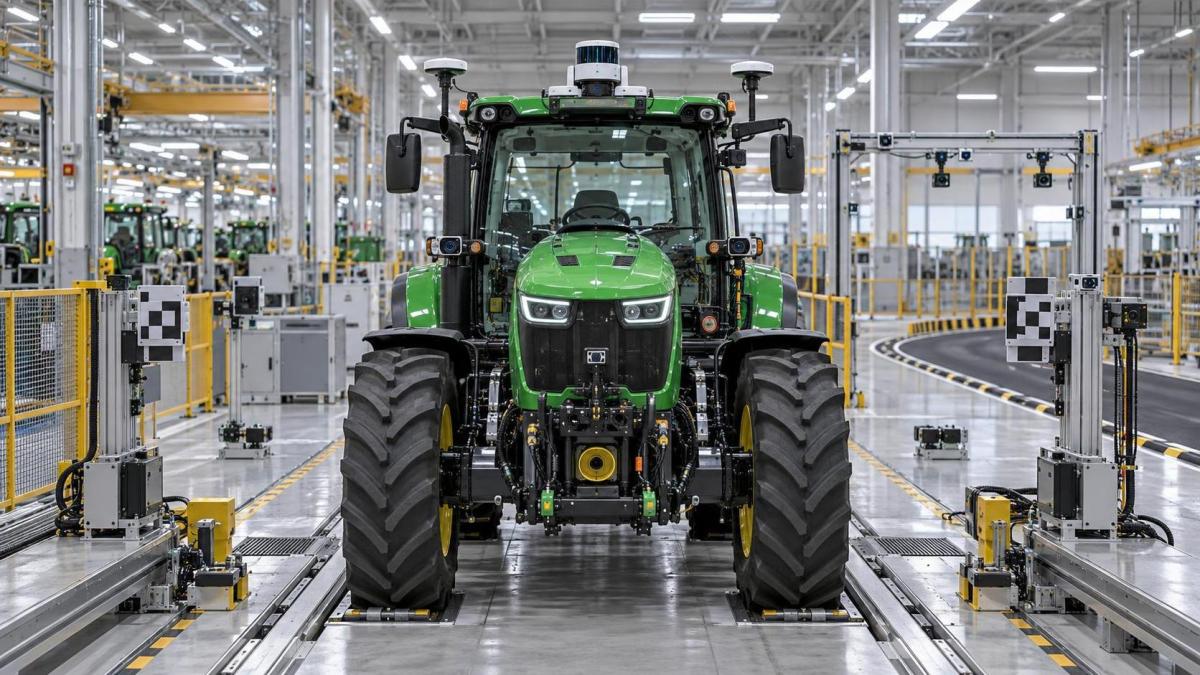
What to assess before choosing an autonomous tractor factory
auth.Dr. Liang ChenTime
Sep 12, 2026Click Count
A procurement decision can become difficult when two autonomous tractor suppliers present similar machine specifications, comparable route-following features, and attractive quotations. The operational risk is rarely visible in the brochure. It often appears later: a machine cannot maintain positioning under local field conditions, a safety stop interrupts work too frequently, replacement parts are unavailable during the season, or software updates depend on a supplier that cannot support the fleet after delivery.
Before choosing an autonomous tractor factory, assess whether it can repeatedly build, validate, document, and support the exact machine configuration required for your operation. The strongest candidate is not simply the factory with the most automation or the lowest unit price. It is the one that can demonstrate controlled production, traceable safety-critical components, realistic application testing, usable software integration, and a credible path for parts, diagnostics, and service.
Start with the operating job, not the tractor catalogue
An autonomous tractor should be evaluated as a working system rather than as a vehicle with an autonomy kit. Before requesting factory information, define the task the machine must complete. A tractor intended for repetitive mowing on relatively open ground has different requirements from one operating around orchards, row crops, implements with moving sections, irrigation equipment, livestock areas, or mixed traffic.
Translate the intended work into conditions the supplier must address. These should include field geometry, slopes, soil condition, expected dust and moisture exposure, visibility constraints, implement type, turning space, transport needs, operating hours, communication coverage, and who will intervene when the machine stops. Without this operating profile, procurement teams may compare features that are technically impressive but irrelevant to the actual deployment risk.
Ask each factory to state clearly which operating conditions fall within the intended machine use and which conditions require additional validation. A reliable response identifies limits rather than claiming that the machine works everywhere. Pay attention to ambiguous wording such as “all-terrain,” “fully autonomous,” or “works in any weather.” Those claims need to be converted into testable questions about traction, localization, sensing, stopping behavior, and operator supervision.
Separate vehicle capability from autonomy capability
A conventional tractor platform may have adequate power, hydraulic output, PTO configuration, and hitch capacity, yet still be unsuitable for autonomous work. Autonomy adds dependencies that must be checked separately: positioning hardware, perception sensors, onboard computing, safety controllers, communication modules, power stability, wiring protection, and software interfaces with tractor and implement controls.
Request a configuration-level description rather than a generic product sheet. It should show which components are standard, optional, sourced externally, or changed according to region and application. This matters because a factory may demonstrate one configuration while quoting another with different sensors, controllers, batteries, tires, or implement interfaces.
Examine whether the factory can produce consistently at the required scale
Factory capacity is more than annual output. A high stated capacity offers little assurance if production depends on manual adjustment, unstable component availability, or a small engineering team that must modify every order. The useful question is whether the manufacturer has a repeatable production system for the specified autonomous configuration.
During due diligence, ask how the factory manages the transition from incoming components to final vehicle release. The answer should cover material identification, version control, assembly instructions, calibrated tools where relevant, electrical harness routing, torque verification, software loading, functional checks, and final inspection records. For autonomous equipment, configuration discipline is essential. A sensor position, firmware version, or wiring change can affect behavior in the field even when the tractor itself appears mechanically identical.
- Can the factory identify the installed version of major autonomy hardware and control software for each delivered machine?
- Are critical parts traceable by serial number, batch, or another controlled identifier?
- Does the production line use documented work instructions for sensor alignment, safety wiring, and controller installation?
- How are engineering changes approved and communicated to assembly, testing, dealers, and service teams?
- Can the supplier explain how it handles shortages or substitutions for cameras, GNSS receivers, processors, batteries, hydraulic valves, and safety components?
Substitution control deserves particular attention. In ordinary equipment manufacturing, replacing an unavailable component with an equivalent part may be manageable. In an autonomous system, a changed camera, antenna, computing module, or power supply can require updated validation. Buyers should ask whether component substitutions trigger software review, regression testing, revised documentation, or a new release approval.
Look beyond a demonstration and inspect the validation approach
A live demonstration is useful, but it is a narrow snapshot. It may take place on a prepared route, with trained personnel, known connectivity, favorable satellite visibility, and no unusual obstacles. The better assessment is whether the supplier has a structured way to test normal operation, foreseeable misuse, degraded conditions, and fault response before shipment.
Request an explanation of the factory acceptance process. It should distinguish between vehicle tests and autonomous-function tests. Mechanical commissioning may verify steering, braking, hydraulic operation, lights, and implement connections. Autonomous validation should additionally address localization status, sensor health, geofence behavior, route execution, remote-command handling where offered, obstacle response, emergency-stop function, loss of communications, and controlled recovery after a fault.

Do not ask only whether the machine “passes testing.” Ask what evidence is retained and what the buyer can review. Examples may include inspection records, calibration status, software release identification, fault logs, acceptance-test checklists, and nonconformance handling records. The factory does not need to disclose proprietary design details to show that release decisions are controlled.
Assess safety as an operational system
Safety cannot be reduced to the presence of an emergency-stop button. Autonomous tractors operate around people, fixed objects, uneven terrain, implements, and changing agricultural environments. The procurement review should establish how the machine detects hazards, what it does when it cannot classify a condition confidently, and how it returns to a safe state after a sensor, communication, or control fault.
Ask the factory to explain the safety concept in practical terms. Where are emergency stops located? Can a nearby worker stop the machine without using a software interface? What happens after an e-stop event? How is restart authorization controlled? Does the tractor halt when it exits a defined area, loses positioning confidence, detects a critical sensor error, or loses communication with a supervisory system? The response should address both the tractor and any attached implement.
Also examine the boundary between factory responsibility and site responsibility. A manufacturer may supply geofencing tools and safety functions, but the operating organization must still manage field access, route approval, supervision rules, exclusion areas, training, maintenance, and seasonal changes to the site. A suitable supplier can state these boundaries openly and provide documentation that supports local risk assessment. Be cautious when a factory treats deployment safety as entirely the buyer’s problem or, conversely, implies that no site controls are needed.
Check software ownership, access, and integration before signing
Autonomy software determines whether a fleet remains usable over time. A purchase agreement should clarify what is included in the delivered machine, which functions require subscriptions or cloud services, who can view operational data, and how the equipment behaves when network access is limited. These questions are especially important when machines work in remote areas or when operational records must remain within the buyer’s chosen data environment.
Request a practical description of the software workflow: creating a field boundary, planning a route, assigning a task, monitoring the machine, responding to alerts, downloading logs, applying updates, and returning the tractor to service after an interruption. A polished dashboard is not enough if routine actions require factory intervention or if the system cannot support the organization’s existing farm-management, fleet-management, or maintenance processes.
Clarify access rights at several levels. Operators may need task access; supervisors may need approval and monitoring controls; maintenance personnel may need diagnostic information; procurement and asset-management teams may need machine identity, usage, and warranty records. The factory should explain how user permissions are managed and whether diagnostic data can be exported in a usable format.
Questions that reveal software dependency
- Can the machine continue a safe, defined operation during a temporary communications outage, or must it stop?
- Who approves and deploys software updates, and can updates be scheduled outside working windows?
- Is there a documented method to roll back an update if a new version causes an operational issue?
- What functions remain available if a cloud service, remote support channel, or subscription is unavailable?
- Can the buyer retain machine logs and configuration history if the supplier relationship changes?
Evaluate service readiness with the same care as manufacturing
For autonomous machinery, field downtime can result from mechanical wear, sensor contamination, damaged wiring, calibration drift, software faults, connectivity issues, or incorrect operating setup. The factory’s support model must therefore cover more than conventional engine and hydraulic repairs.
Ask where first-line service will be performed and which issues can be resolved locally. A credible support plan identifies spare-parts channels, lead-time communication, remote diagnostics, escalation paths, service documentation, and the training required for technicians. It should also distinguish between tasks the owner can perform, tasks requiring an authorized service partner, and tasks that need factory-level engineering involvement.
Parts availability should be discussed by category. Filters, tires, belts, hoses, and wear components follow a different supply pattern from lidar units, cameras, GNSS hardware, controller modules, antennas, wiring harnesses, and proprietary safety components. The latter items can immobilize a machine even when the underlying tractor is mechanically sound. Ask what spares are recommended for the initial fleet, how replacements are configured, and whether a new component requires calibration or software pairing.
Use a controlled factory review rather than a score based on sales claims
A structured comparison helps prevent a low purchase price from masking high lifecycle exposure. Build the evaluation around evidence that can be reviewed, not around broad assurances. The criteria do not need equal weighting. If the tractor will work near people or valuable infrastructure, safety validation and operating limits may outweigh cosmetic finish or optional convenience features. If the fleet will run in remote locations, service access and communication resilience may deserve greater weight.
- Define the intended duty cycle. Document the implement, terrain, field layout, supervision model, seasonal workload, and unacceptable failure modes.
- Issue one consistent technical questionnaire. Require each candidate factory to answer against the same configuration and application assumptions.
- Review documents before the visit. Focus the factory visit on unresolved questions rather than general presentations.
- Observe build and release controls. Look for configuration identification, assembly discipline, test records, and clear separation between production and rework.
- Witness relevant operating behavior. Where feasible, observe startup, route engagement, stopping, fault indication, recovery, and implement interaction.
- Set acceptance conditions in the contract. Define the delivered configuration, documentation package, training scope, support obligations, software terms, and factory or site acceptance requirements.
The final decision should rest on whether the factory can support a controlled deployment throughout the equipment life cycle. A supplier that provides transparent operating limits, machine-specific records, disciplined change management, and realistic service commitments is usually easier to manage than one that relies on broad autonomy claims. That distinction becomes most important after the tractor arrives, when the buyer needs reliable work completion rather than another demonstration.
Recommended News
- 00
0000-00
What determines the solar tracker price for utility-scale projects?Solar tracker price for utility-scale projects depends on steel, site conditions, controls, logistics, installation, and lifecycle value. Learn how to compare proposals wisely. - 00
0000-00
Which machinery parts wear fastest in solar tracker drive systems?Machinery parts in solar tracker drive systems wear fastest at slew drives, bearings, motors, and couplings. Discover warning signs and maintenance tips. - 00
0000-00
What to assess before choosing an autonomous tractor factoryAutonomous tractor factory selection guide: assess production control, safety validation, software access, service readiness, and lifecycle support before buying.
000000-00
{item.title}{item.description}Search News
Industry Portal
Hot Articles
- What determines the solar tracker price for utility-scale projects?Solar tracker price for utility-scale projects depends on steel, site conditions, controls, logistics, installation, and lifecycle value. Learn how to compare proposals wisely.
- Which machinery parts wear fastest in solar tracker drive systems?Machinery parts in solar tracker drive systems wear fastest at slew drives, bearings, motors, and couplings. Discover warning signs and maintenance tips.
- How grid monitoring systems improve outage response in the Middle EastDiscover how grid monitoring systems Middle East utilities use to locate faults faster, prioritize critical loads, and improve outage response across complex power networks.
Popular Tags