Which health innovations help patients manage diabetes at home?
auth.Dr. Liang CheTime
Oct 17, 2026Click Count
The most useful health innovations for managing diabetes at home address a specific difficulty: continuous glucose monitors reveal glucose patterns, connected insulin pens record injections, automated insulin delivery systems adjust insulin delivery, and telehealth connects home readings with treatment decisions. The right choice starts with the problem causing the most disruption—unexpected lows, missed doses, difficult overnight control, or uncertainty about meals and activity.
Insulin use changes the decision substantially. With multiple daily injections, glucose alerts and reliable dose records can be especially valuable. Without insulin, a simpler meter or a short period of continuous monitoring may answer the immediate question. More technology adds value when its information leads to a clear action without creating an unmanageable routine.
Match the tool to the daily problem
These options overlap. A connected pen paired with a glucose monitor offers visibility while preserving injections. A pump-based system adds automation but introduces infusion-site care, device changes, and a different backup routine. Choosing between them requires considering the work each system creates as well as the work it removes.
Continuous glucose monitoring: useful trends need interpretable alerts
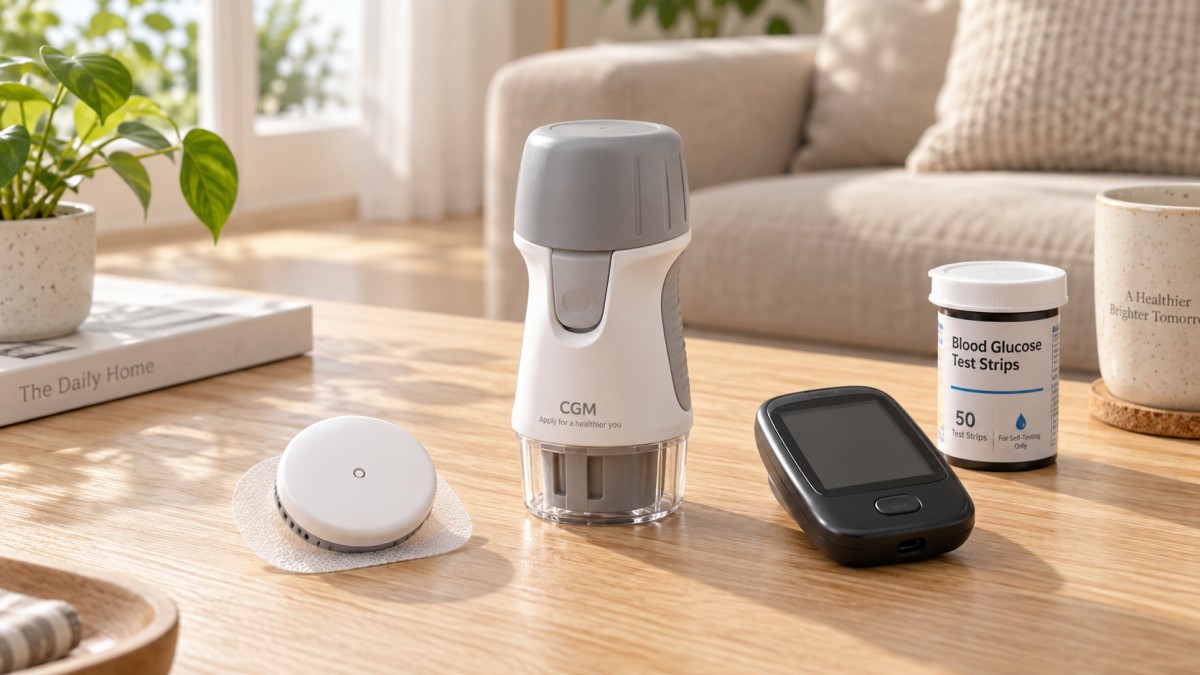
A continuous glucose monitor, or CGM, measures glucose in fluid beneath the skin through a wearable sensor. It shows direction and patterns that isolated finger-stick readings miss, including overnight changes and rises after meals. Some systems send readings and alerts automatically; others have different scanning or alert requirements. Those differences matter when the main concern is a low during sleep.
Prioritize the alert workflow before comparing screen features. Establish whether urgent alerts require a nearby phone, a separate receiver, an active wireless connection, or particular phone settings. Also confirm what remains available without internet access. A device that displays readings locally may still need internet access to share them with another person.
Sensor glucose and blood glucose do not always match, especially during rapid changes. Pressure on a sensor during sleep can also produce an unexpectedly low reading. When symptoms and readings disagree, or a value seems implausible, use a blood glucose meter according to the device instructions and the agreed care plan. Keep that meter available even after switching to CGM.
Comfort has practical consequences. Adhesive reactions, sweating, clothing friction, and difficulty reaching an approved insertion site can interrupt use. Compare sensor replacement requirements, insertion steps, water-exposure limits, and any restrictions involving medicines or medical procedures. A trial or demonstration can reveal handling difficulties that a specification sheet will miss.

During a review, look beyond average glucose. Time below range helps identify low-glucose exposure, while daily traces show whether recurring changes follow meals, exercise, or medication timing. A favorable average can hide alternating highs and lows. Agree on individualized targets and alert settings with the diabetes team so that notifications prompt useful responses instead of constant interruption.
Connected pens help resolve uncertainty about injections
Connected insulin pens and compatible attachments record injection information, such as timing and dose, and transfer it to an app. Their clearest benefit is answering a familiar question: “Did I already take that injection?” A reliable record also gives a clinician more context when glucose repeatedly rises after a meal.
Compatibility deserves close attention. Confirm the exact insulin formulation, cartridge or pen format, dose increments, phone requirements, and regional availability. A tracking attachment does not necessarily measure everything a connected pen measures. Some devices record that an event occurred without confirming the full dose delivered into the body.
Ask how the system handles priming doses, incomplete injections, manual entries, and delayed synchronization. A clean-looking history can be misleading if preparation steps appear as treatment doses or some injections are missing. The distinction matters when an app estimates active insulin—the amount of a previous dose still working.
Some systems include dose calculators, but recommendations depend on correctly prescribed settings and accurate inputs. An incomplete dose history can lead to underestimating active insulin and encourage overlapping correction doses. Connected pens remain a way to support injection decisions; they do not automatically deliver insulin or remove the need for individualized dosing guidance.
Automated insulin delivery offers more support and requires more preparation
Automated insulin delivery combines a compatible glucose sensor, insulin pump, and control algorithm. The system adjusts insulin delivery using sensor information. Depending on its design, it can reduce, pause, or increase delivery, and some systems provide automated correction doses. Its suitability depends on the diabetes type, treatment needs, and the system’s approved use.
This option deserves consideration when insulin adjustments remain burdensome despite appropriate education and follow-up, particularly when overnight patterns are difficult. It also requires comfort with wearing equipment, changing infusion sites or pods, responding to alarms, and maintaining supplies. A simpler setup can be a better fit when these tasks would prevent consistent use.
Most available systems still require meal-related input or insulin dosing. The amount of carbohydrate information required varies, so compare the actual meal routine rather than assuming “automated” means no meal decisions. Exercise, illness, and sensor interruptions also require system-specific instructions.
Persistent high glucose on a pump needs a clear troubleshooting plan. Because pumps generally use rapid-acting insulin, an interrupted infusion can lead to insulin deficiency more quickly than a regimen that includes long-acting insulin. A dislodged cannula, blocked infusion site, or empty reservoir requires action; an algorithm cannot correct a physical delivery failure.
Training should cover when to measure ketones, replace an infusion set, use backup injections, and seek urgent help. Vomiting, abdominal pain, rapid breathing, or marked drowsiness alongside high glucose require urgent medical assessment. Keep prescribed backup insulin and written instructions accessible, including how and when to restart the pump after using backup insulin.
Remote care works when readings lead to decisions
Telehealth and remote glucose review are useful when the main obstacle is getting timely help interpreting home data. A connected meter can serve this purpose without requiring continuous monitoring. For example, a brief set of readings around a recurring meal or overnight period can support a focused medication discussion.
The service arrangement matters as much as the software. Establish whether appointments include data review, which devices upload successfully, and who is responsible for responding. Automatic sharing does not mean someone watches every reading. Unless a service explicitly provides active monitoring, urgent symptoms and dangerous readings require the established immediate-response plan.
Prepare a short question for each review: Are lows following activity? Is fasting glucose rising despite stable evening readings? Are missed injections contributing to the pattern? Include relevant medication changes, illness, and unusual activity. This context helps distinguish problems that look similar on a graph but need different responses.
For medication reminders and meal apps, favor features that reduce effort. Barcode scanning or photo logging is useful only if the resulting food information is sufficiently accurate for its purpose. Portion size, preparation method, and mixed meals can undermine carbohydrate estimates. An app-generated estimate should not automatically become an insulin dose.
Separate useful features from misleading promises
A familiar interface or an “AI-powered” label does not establish clinical reliability. Before relying on a tool for treatment decisions, identify its intended medical purpose, whether it has the appropriate authorization in your location, and whether evidence supports that specific use. General wellness coaching and medication dosing require different levels of scrutiny.
Be particularly cautious about watches or rings claiming to measure glucose without piercing the skin. Do not use an unverified glucose estimate to calculate insulin or treat a suspected low. A watch that displays readings from a compatible medical glucose sensor serves a different function from one claiming to measure glucose independently.
Likewise, connected blood pressure monitors, activity trackers, and smart scales can support broader diabetes care, but they do not replace glucose measurements or prescribed treatment. Their value depends on an agreed response to the results. Buying several devices at once can create more dashboards without resolving the original difficulty.
Make the home routine part of the comparison
Before committing, request a demonstration of the complete routine: preparing the device, inserting or applying it, reading the display, acknowledging an alarm, and replacing supplies. Small buttons, faint screens, difficult packaging, or a complicated pairing process can outweigh an attractive feature list. Accessibility should include vision, dexterity, hearing, language, and confidence with phones.
Calculate the ongoing burden as well as the initial purchase. Sensors, infusion supplies, pen components, adhesives, subscriptions, and backup testing materials can create recurring expenses. Confirm coverage for the exact configuration and replacement schedule. A covered pump does not necessarily mean every compatible sensor or accessory is covered.
Phone compatibility needs model-level verification, including the operating system. Find out what happens during a lost phone, software update, depleted battery, or internet outage. For rechargeable equipment, include charging access in the daily routine and travel plan. Reliable supply deliveries and accessible technical support also affect whether a system remains usable at home.
Data sharing should be deliberate. Review who can see glucose readings, whether caregiver access is optional, and how to remove it. When sharing is helpful, agree on what warrants a call and what the person wearing the device will handle independently. Repeated calls about every glucose rise can make an otherwise useful feature stressful.
A practical starting point is one clearly defined improvement: fewer overnight interruptions, less uncertainty about injections, or better understanding of a recurring glucose pattern. Set a review date after adequate training and regular use. At that review, assess glucose patterns alongside sleep, confidence, skin comfort, and daily workload; those results provide a concrete basis for keeping, adjusting, or replacing the tool.
Next:Already The FirstRecommended News
- 00
0000-00
Which health innovations help patients manage diabetes at home?Explore health innovations for managing diabetes at home, from glucose monitors to connected insulin pens. Compare benefits and daily demands to find tools that fit your care needs. - 00
0000-00
How to size manufacturing equipment for a new production lineManufacturing equipment sizing made practical: calculate real capacity, identify bottlenecks, balance buffers, and choose scalable assets for a reliable new production line. - 00
0000-00
Which filing cabinets offer reliable security for confidential records?Filing cabinets with fire ratings, reinforced steel, secure locks, and anchoring protect confidential records. Compare the best options for theft, fire, and access control.
000000-00
{item.title}{item.description}Search News
Industry Portal
Hot Articles
- Which health innovations help patients manage diabetes at home?Explore health innovations for managing diabetes at home, from glucose monitors to connected insulin pens. Compare benefits and daily demands to find tools that fit your care needs.
- How to improve AMI cyber security for remote disconnect commandsStrengthen AMI cyber security for remote disconnect commands. Discover practical controls for authorization, replay protection, impact limits, and verified execution to reduce service risks.
- Which energy storage stability metrics matter for frequency control?Explore energy storage stability metrics for frequency control, from response latency to sustained delivery. Learn what to measure and verify to compare systems with confidence.
Popular Tags