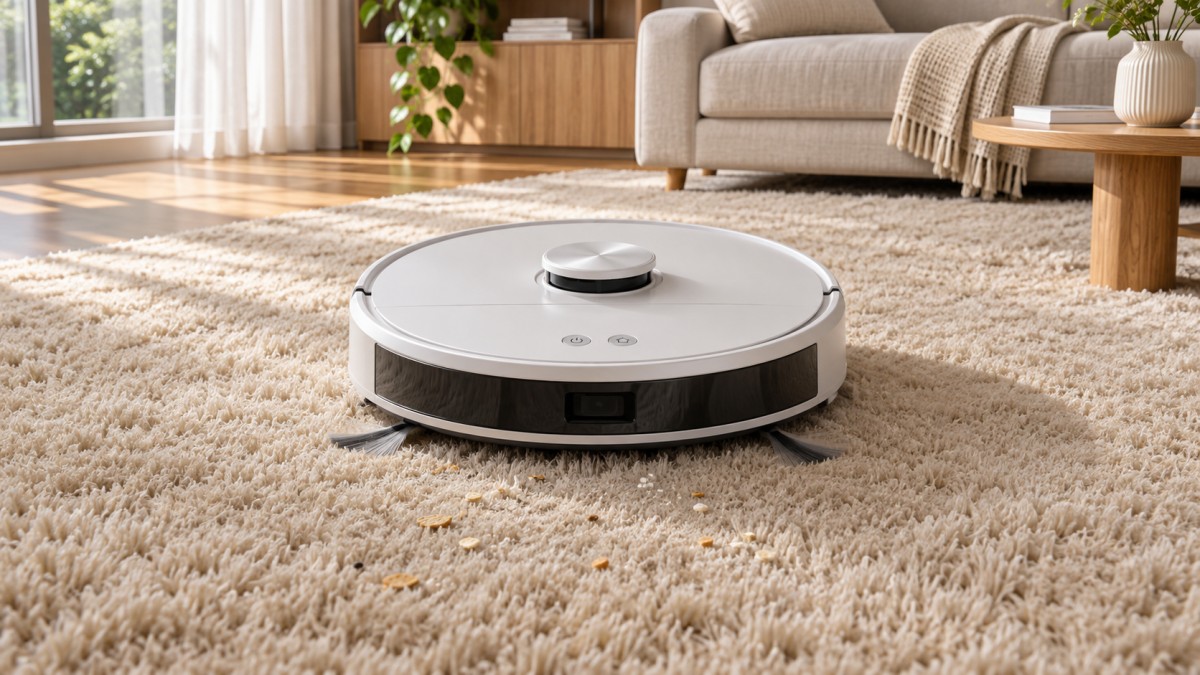
Are robot vacuum cleaners effective on thick carpets?
auth.Dr. Liang CheTime
Nov 17, 2026Click Count
Robot vacuum cleaners can keep many thick carpets looking clean, but they do not all have the traction, clearance, or brush design to handle plush fibers. A suitable model should be rated for at least the carpet’s pile height, move across it without repeated stalls, and collect debris without damaging the surface. Even then, a conventional vacuum is often useful for deeper cleaning and areas the robot cannot reach.
For a dense, medium-to-high pile carpet, a robot designed for carpet use can reduce the buildup of crumbs, hair, and surface dust between manual cleans. Very long, loose, or shaggy fibers are a harder test: they can wrap around a brush, block the intake, or prevent the wheels from gripping. Before comparing suction figures, establish whether the robot can travel safely over the carpet you actually have.
Start with the carpet, not the suction rating
Carpet thickness has several dimensions. Pile height is the length of the fibers above the backing, while density describes how closely those fibers are packed. Softness, fiber shape, and the firmness of the backing also affect how easily a robot moves. Two carpets with a similar pile height can behave very differently under the same machine.
To estimate pile height, part the fibers and place a ruler against the backing, then read the height at the top of the pile without pressing it flat. Take measurements in several places, particularly where a rug is fluffier or shows less wear. If the carpet has loops, measure from the backing to the top of the loops. Include a thick pad when considering whether the robot can climb onto a rug, but keep pad thickness separate from pile height when comparing a manufacturer’s carpet specification.
Look for a stated maximum supported pile height in the robot’s instructions or detailed specifications. That figure is a starting point, not a guarantee of cleaning performance. A carpet near the stated limit leaves less room for variation in pile density, rug edges, or compressed fibers springing back around the machine. If the manufacturer excludes high-pile carpet, shag, or loose-fringed rugs, treat that restriction as more useful than a general claim that the robot works on carpets.

A robot can also reach the main carpet but fail at a doorway or rug edge. A raised transition strip, curled corner, or thick underlay creates a separate obstacle from the pile itself. Compare the height and shape of those transitions with the machine’s stated obstacle-climbing capability. A robot’s ability to climb a firm threshold does not automatically prove it can climb a soft rug edge that bends or bunches under its wheels.
What a robot can realistically remove
On compatible thick carpet, repeated passes can collect loose hair, lint, crumbs, and dust near the surface. Regular runs are valuable because debris has less time to be walked into the pile. Coverage matters as much as a single pass: a robot that travels consistently through a room can maintain it more effectively than one that repeatedly avoids or gets stuck on its thickest section.
Fine grit settled near the backing is more demanding. Deep cleaning requires airflow through the carpet and sufficient agitation to loosen embedded particles. A robot has a low body and a relatively narrow cleaning head, so its published suction figure alone cannot establish how much soil it will remove from a particular carpet. Results also change as the bin and filters fill, hair accumulates around the brush, and fibers restrict airflow at the intake.
Pet hair presents a different challenge from sand. Hair can sit visibly on top, tangle around the roller, or become woven through the pile. A brush that picks up surface hair well may still need frequent cleaning, especially when long hair winds around its ends. For household dust, a sealed filtration system and a suitable filter are useful considerations, but filtration describes what the vacuum retains after pickup; it does not prove that the machine removes deeply embedded dirt.
Plan on a conventional vacuum for periodic deeper passes, edges, stairs, and spots hidden under furniture that the robot cannot enter. If the carpet has a care label or the flooring supplier recommends a particular type of vacuum head, use that guidance when deciding whether a rotating brush is appropriate.
Features that make a difference on plush carpet
Wheels, suspension, and clearance
A robot needs enough wheel grip and downward travel to keep moving while its body passes over the pile. Large-looking wheels do not guarantee traction: soft fibers can compress under the wheels while the underside drags, leaving the robot spinning or moving in short, uneven bursts. A machine that frequently reverses, reports a wheel error, or stops in the same area may be struggling with movement rather than dirt pickup.
Look for carpet compatibility that is specific to the model, along with independent demonstrations on a similar pile where available. Videos of smooth hard floors or short carpet say little about how a machine handles a thick, soft rug. A low-clearance robot may still be useful elsewhere in the home, but its slim profile is of limited value if the underside catches on the main carpet.
Brush construction and carpet care
The main roller loosens debris and guides it toward the suction opening. Rubber rollers can be convenient to clean, while bristled or combination rollers provide a different type of agitation. Neither material is automatically best for every thick carpet: pickup depends on the roller’s shape, speed, contact with the pile, and the carpet’s construction.
Gentle, loose, looped, or delicate fibers deserve particular attention. A rotating brush can snag a loose yarn or pull at a loop that was already damaged. Follow the carpet maker’s cleaning instructions, inspect the surface for loose threads, and test the robot in an inconspicuous area. Stop the run if fibers are pulled out, the carpet changes appearance, or the roller repeatedly catches. Cutting a loose loop flush without understanding the carpet’s construction can make damage worse; seek the carpet supplier’s advice when in doubt.
Side brushes can also disturb fringe or tassels. Tuck fringe away only if doing so is safe for the rug, or use a no-go zone to keep the robot clear. A model with a brush that is easy to remove will make routine hair removal less frustrating.
Suction and carpet detection
Many specifications advertise suction in pascals, a measure associated with pressure. A larger number does not provide a complete comparison of carpet cleaning because manufacturers may measure or present figures under different conditions. Airflow, the seal around the cleaning head, brush agitation, and the resistance of the carpet all affect what reaches the dustbin. Compare independent cleaning tests on similar carpet when possible, and use the published figure as one piece of information.
Some robots increase suction automatically when they detect carpet. This can improve pickup without running at the highest setting throughout the home. On particularly thick pile, however, a higher setting can increase resistance at the cleaning head or drain the battery faster. If the robot slows dramatically, becomes unusually noisy, or stops after switching modes, try a lower setting if available and observe whether movement improves. Better mobility can produce a more complete clean than maximum suction on a robot that cannot traverse the room.
Matching the machine to the floor
For mixed flooring, mapping and no-go zones are useful when only one rug causes trouble. The robot can maintain accessible hard floors and compatible carpet while leaving a delicate rug for manual cleaning. Verify that the relevant boundary features work in the way you need: some models use an app-based map, while others rely on physical barriers or offer fewer controls.
If the machine also mops, examine its carpet behavior separately from its vacuuming ability. Some lift the mop pads, some avoid detected carpet, and some require the pads or mopping attachment to be removed. A lifting mechanism must raise a damp pad far enough above the actual pile to prevent contact; a thick carpet can still brush against a pad that clears a short rug. When clearance is uncertain, remove the mopping attachment or keep the carpet out of the mopping route.
Test performance before relying on a new robot
A short trial on the actual carpet reveals problems that specifications cannot fully predict. Begin with a clear floor and an empty bin. Run the robot over the thickest area, across relevant transitions, and around furniture where turns are tight. Watch whether it enters and exits the rug, follows a steady path, and completes the area without assistance. Repeat after the first run if fibers or hair have accumulated on the roller.
For a simple pickup comparison, place a small amount of ordinary, dry debris such as crumbs and loose hair on an inconspicuous section, then observe what remains after a normal pass. Avoid using fine powders or large quantities that the vacuum’s instructions prohibit. This is a practical comparison of surface pickup, not a laboratory test of deep cleaning. Inspect the carpet and brush afterward for snags, tangles, or excessive shedding.
Also observe the robot’s behavior at the edge of the carpet. If it turns away before climbing, the edge or transition may be the problem. If it climbs successfully but stops farther in, pile resistance, brush entanglement, or reduced wheel traction are more plausible causes. If it travels normally but leaves visible debris, investigate the brush, suction setting, blocked intake, and bin before blaming mobility.
Clean the roller, remove hair from its ends, empty the bin, and maintain the filters according to the machine’s instructions. Thick carpet and pet hair can fill a small bin quickly, making a robot that initially performed well appear less effective. A trial period with a clear return policy is particularly valuable when the carpet is near the machine’s stated limit: the decisive evidence is whether it cleans that floor repeatedly without getting stuck or damaging the fibers.
Next:Already The FirstGot questions about this topic or seeking best practices for your project? Drop us a line below, and let Hengda Engineering's experts help you out.
Recommended News
- 00
0000-00
Are robot vacuum cleaners effective on thick carpets?Robot vacuum cleaners can maintain thick carpets, but results vary. Discover which features matter, how to check compatibility, and when deeper cleaning is needed. - 00
0000-00
How to zero digital calipers before taking a measurementLearn how to zero digitalcalipers, check repeatability, and verify accuracy with a reference for more reliable measurements. - 00
0000-00
How to choose blow molding machinery for bottle productionChoose blowmoldingmachinery with confidence. Compare bottle processes, production capacity, quality controls, and operating costs to find the right fit.
000000-00
{item.title}{item.description}Search News
Industry Portal
Hot Articles
- Are robot vacuum cleaners effective on thick carpets?Robot vacuum cleaners can maintain thick carpets, but results vary. Discover which features matter, how to check compatibility, and when deeper cleaning is needed.
- How to calculate shipping capacity for containerized batteriesCalculate shipping capacity for containerized batteries with practical guidance on payload, dimensions, route limits and dangerous goods requirements.
- E3/DC Plans LG Battery Replacements After German Home Storage FireE3/DC plans LG battery replacements after a German home storage fire. Find out what the proposed batch-specific plan means for owners and installers.
Popular Tags