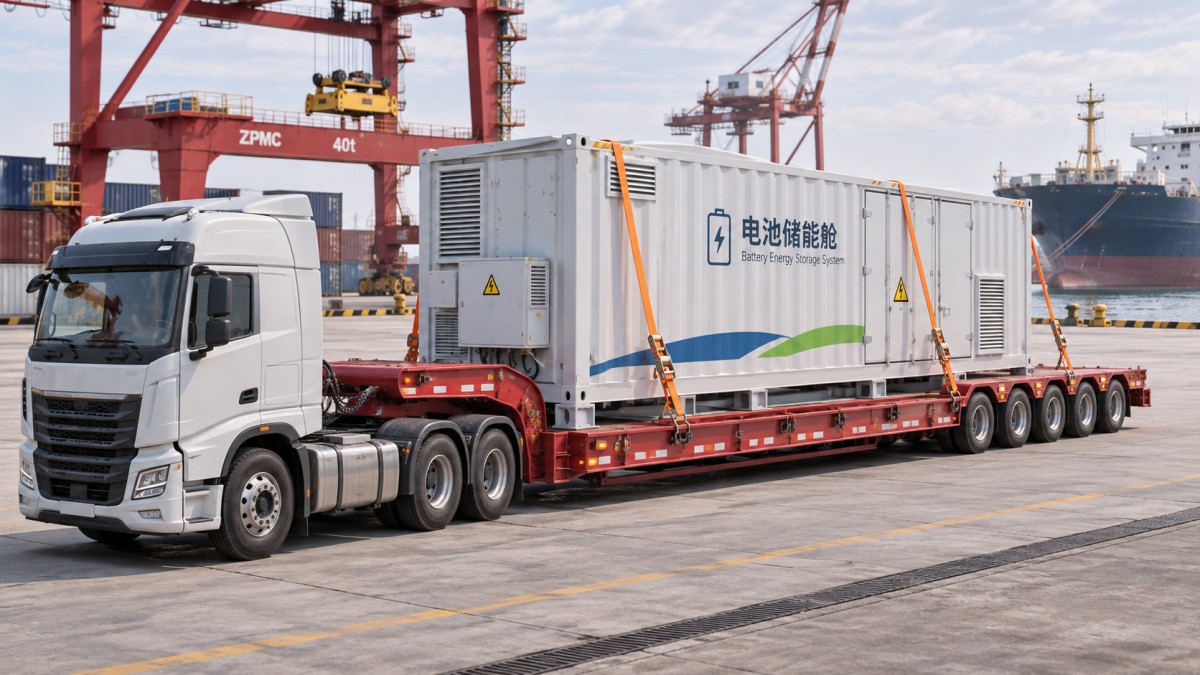
How to calculate shipping capacity for containerized batteries
auth.Dr. Elena VoltTime
Nov 16, 2026Click Count
Shipping capacity for a containerized battery is the number of complete units that can move through every stage of the planned journey within the applicable weight, size, handling and dangerous goods limits. Start with the fully prepared transport weight and dimensions of one unit, then check each road, terminal and vessel movement. The lowest workable limit determines the shipment plan.
For project managers, the result is often expressed as units per truck, units per vessel allocation and total shipments for the project. A battery enclosure may fit within a vehicle’s deck space yet exceed an axle limit, require a different crane, or be unacceptable to the intended carrier. The calculation therefore needs a route-specific equipment check as well as a simple payload calculation.
Define the unit you are shipping
Before calculating capacity, establish exactly what will travel as one piece. A containerized battery energy storage system may be shipped fully populated, with battery racks removed, or as an enclosure accompanied by separate battery consignments. Each arrangement creates a different set of weights, dimensions and handling requirements.
Ask the supplier for a transport drawing and a weight breakdown for the proposed shipping configuration. The figures should cover the enclosure, installed equipment, batteries, coolant if present, internal restraints and any permanent lifting features. Add temporary items that travel with the unit, such as protective covers, skids, braces and packaging. Record lifting gear separately if it is needed only during handling and does not remain on the vehicle.
Use the actual shipping configuration rather than a catalog weight or an empty enclosure weight. Also establish the center of gravity and its position in both length and width. A unit can be within the vehicle’s total payload limit while placing too much load on one axle group or imposing an uneven lift.
The minimum information for each piece is:
- Gross shipping weight, including everything attached or packed with it for transport.
- Overall length, width and height, including protrusions, skids and protective fixtures.
- Center of gravity, lifting points, permitted lifting angles and handling restrictions.
- Battery identification, shipping documentation and any conditions specified by the manufacturer.
If the project includes different enclosure types, calculate each type separately. Mixing a lighter electrical enclosure with heavier battery units can change how vehicles are loaded, but it does not make the weight or dimensions of either piece interchangeable.
Calculate the preliminary number of units per movement
For a preliminary weight-based estimate, divide the available cargo payload by the gross shipping weight of one unit and round down to a whole number:
Units allowed by weight = available cargo payload ÷ gross shipping weight per unit, rounded down.
Available cargo payload is the limit for the specific vehicle or transport equipment after allowing for the vehicle’s own weight and any other weight that counts against its legal or operational limit. Do not subtract the vehicle tare twice if the carrier has already supplied a usable cargo payload. Equally, check whether that payload already accounts for restraints, dunnage and other items carried on the trip.
Next, determine how many units physically fit in the approved loading arrangement. Account for the usable deck or cargo-space dimensions, access for securing the load, and any separation or stowage requirements. For road transport, include the loaded height from the road surface, not just the height of the battery enclosure.
The preliminary capacity is the lower of the weight-based and space-based results. It remains provisional until the carrier checks load distribution, route restrictions, handling equipment and acceptance of the dangerous goods.
For example, suppose a carrier confirms a usable cargo payload of 30 tonnes for a proposed movement, including an allowance for restraints. Each fully prepared battery unit weighs 12 tonnes. The weight calculation gives 30 ÷ 12 = 2.5, rounded down to two units. If the approved deck layout accommodates only one unit, the planning capacity is one unit per movement. If two fit on the deck, two are still subject to axle, securing, route and carrier approval.
For ten identical units, a confirmed capacity of one per truck would mean ten loaded truck movements. At two per truck, the arithmetic gives five, provided that every planned load can use the same approved configuration. Separate deliveries, site receiving windows or a different final unit configuration may increase the actual number of movements.

Check the limiting points along the route
A project’s usable shipping capacity can change at each leg. A unit might travel individually by road, be lifted at a terminal and then share a vessel with other cargo. The number that fits on one truck should not be treated as the number a vessel will accept, or vice versa.
Road transport: payload is only the first screen
Ask the haulier to check the proposed load against gross vehicle weight, axle and axle-group limits, deck capacity and load distribution. The position of the battery’s center of gravity matters because shifting the unit on the trailer changes how its weight is shared between axles. Trailer tare, tractor configuration, fuel and other equipment can also affect the legal load available on a particular trip.
Route geometry can be just as restrictive. Review bridge and road weight limits, height clearances, width restrictions, turning areas and site access for the loaded vehicle. Where a movement requires a permit, the permitted load, route and travel conditions become part of the transport plan. A capacity estimate based on a standard trailer is of little use if that trailer cannot reach the site or distribute the load legally.
Lifting and terminal handling: check the complete lift
Confirm the crane or terminal equipment can handle the load at the required working radius and under the planned lift arrangement. The lifted load may include spreader beams, slings, shackles and other rigging in addition to the battery unit. Equipment capacity depends on the actual configuration and lift conditions, so a crane’s headline rating alone is not an approval.
Check that lifting points and sling angles match the manufacturer’s instructions, and that the ground or quay can support the handling equipment and its loads. At the destination, allow enough space to position the vehicle, rig the unit and place it on its foundation. A delivery plan can fail at the final lift even when the road movement is feasible.
Sea transport: obtain a carrier-specific allocation
For the sea leg, ask the shipping line or its agent how the battery system will be accepted and stowed. The answer depends on the cargo’s declared dimensions, gross mass, configuration, dangerous goods classification, vessel arrangements and the carrier’s own acceptance conditions. A unit built in an enclosure resembling a standard freight container should not automatically be assumed to qualify for ordinary container handling or stowage.
Where applicable, the verified gross mass and other required cargo information must be supplied through the agreed shipping process. Confirm the basis of any space allocation: a vessel capacity expressed in container slots does not by itself establish how many heavy battery units can be booked or safely stowed.
Build battery transport requirements into the calculation
Lithium batteries are dangerous goods, and the applicable requirements depend on the battery type, shipping configuration, mode of transport and jurisdictions on the route. Classification and documentation should be established before booking, rather than after the shipment count has been fixed. The shipper and carrier need to agree on the description and acceptance conditions for the actual configuration, including whether batteries are installed in equipment or shipped separately.
Transport rules may address items such as testing, packaging, marking, labeling, documentation and conditions of carriage. The applicable edition of the rules and any carrier or national variations matter. For sea transport, the IMDG Code is central to the dangerous goods assessment; air, road and rail movements can involve different regulatory frameworks. Engage a qualified dangerous goods specialist and the intended carriers to determine the requirements for each leg.
Damaged, defective, recalled or waste batteries can face different restrictions from batteries offered for normal transport. Do not assume that a unit which arrived under one set of conditions can be returned in the same way after a fault or incident. A change in battery state or classification can affect packaging, carrier acceptance and the available route.
These requirements affect capacity as well as paperwork. A carrier may impose a unit limit, require a particular stowage arrangement or decline a proposed configuration. Any such condition can reduce the number of units available per sailing even when vessel space and weight appear sufficient.
Turn the estimate into a delivery plan
Once the route is defined, record the maximum accepted number of units for each leg and the constraint behind it. For a consistent shipment configuration, the lowest confirmed limit governs the number that can move together through the full route. The total number of trucks, handling operations and vessel bookings can then be calculated for their respective legs; they do not have to be identical.
Keep the calculation tied to the transport drawing, carrier response and route assumptions used to produce it. If the supplier adds equipment, changes the battery configuration or moves a lifting point, revisit the weight, center of gravity and handling checks. A small design change may leave the enclosure’s outward dimensions unchanged while changing the vehicle or lift arrangement needed to deliver it.
The figure to carry into the project schedule is the accepted capacity for the defined configuration and route, supported by the relevant transport parties. Where a leg has not yet been booked or approved, use the preliminary number for planning and keep the resulting delivery schedule flexible until that constraint is resolved.
Next:Already The FirstGot questions about this topic or seeking best practices for your project? Drop us a line below, and let Hengda Engineering's experts help you out.
Recommended News
- 00
0000-00
How to calculate shipping capacity for containerized batteriesCalculate shipping capacity for containerized batteries with practical guidance on payload, dimensions, route limits and dangerous goods requirements. - 00
0000-00
Portugal Launches Tenders for 1,050 MVA of Battery Storage CapacityPortugal battery storage tenders offer 1,050 MVA of grid capacity, including 750 MVA for standalone projects. Explore the opportunity and key details to verify. - 00
0000-00
Storage Wins Nearly 40% in Belgian Capacity Auction; German Debut Goes to GasBattery storage won nearly 40% of Belgium’s capacity auction, while gas secured all capacity in Germany’s debut. Explore the implications for developers and buyers.
000000-00
{item.title}{item.description}Search News
Industry Portal
Hot Articles
- How to calculate shipping capacity for containerized batteriesCalculate shipping capacity for containerized batteries with practical guidance on payload, dimensions, route limits and dangerous goods requirements.
- E3/DC Plans LG Battery Replacements After German Home Storage FireE3/DC plans LG battery replacements after a German home storage fire. Find out what the proposed batch-specific plan means for owners and installers.
- How does EV fleet load balancing prevent site power overloads?Discover how EV fleet load balancing prevents site power overloads, protects electrical equipment, and helps vehicles get the energy they need before departure.
Popular Tags