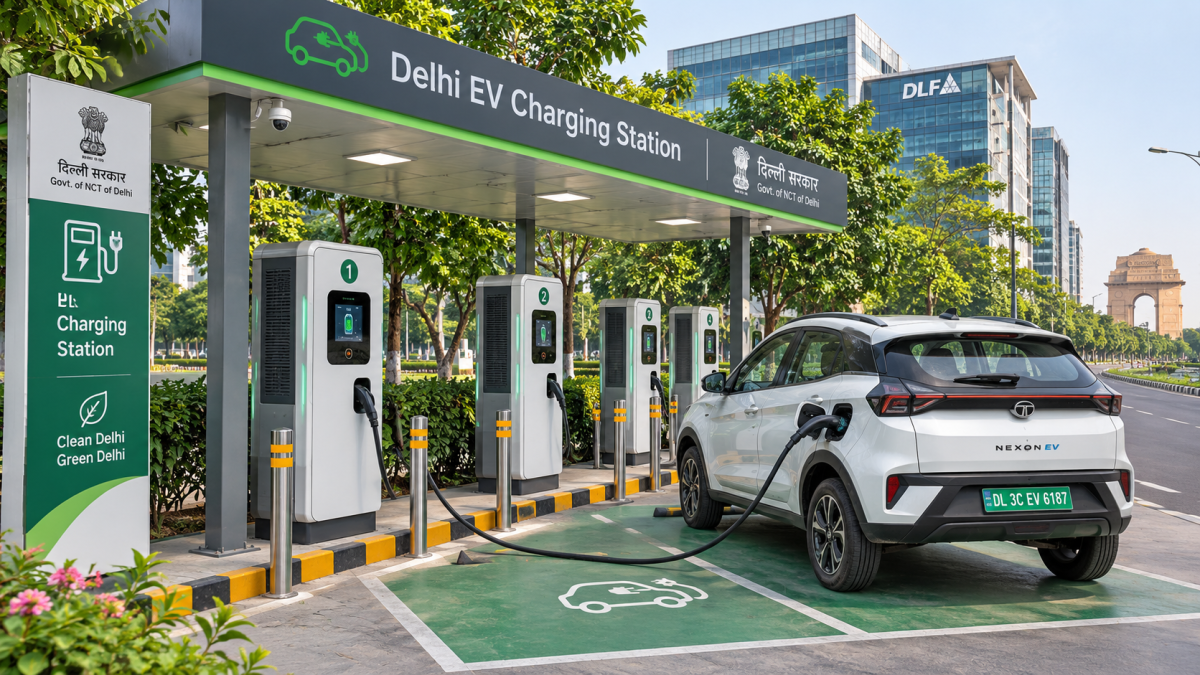
Delhi Plans 540 Public EV Chargers at 180 Locations
auth.Marcus WattTime
Nov 27, 2026Click Count
On November 26, 2026, the Delhi government announced plans to install 540 public electric vehicle chargers across 180 locations, at an estimated cost of approximately 6.2 billion rupees. The project forms part of India's federal PM E-DRIVE program and is intended to strengthen the capital's charging network ahead of a strict vehicle electrification mandate due to take effect in January 2027.
The announcement links two elements of the transition: a requirement for more vehicles to be electric and the public infrastructure needed to support their use. The scale of the plan is clear, but its effect on charging access will depend on where the sites are placed, when they open and how reliably they operate.

What the proposed network would add
The plan calls for chargers at 180 locations. That works out to an average of three chargers per location, although the announcement does not establish how many will be installed at each site. The distinction matters: the number of locations indicates the potential geographic reach of the network, while the number of chargers gives an indication of capacity across those locations.
Neither figure alone establishes how convenient the network will be for drivers. Coverage will depend on the distribution of sites and their accessibility, while the ability to serve vehicles will also depend on charger performance and availability. A site with several chargers could provide more capacity in one place; a wider spread of locations could put charging within reach of more journeys. The balance between those objectives will become clearer as the project takes shape.
The estimated project cost covers the announced investment as a whole. It does not establish the cost of an individual charger or explain how spending will be divided among equipment, installation and other project requirements.
Why timing matters
The planned network is intended to support a vehicle electrification mandate scheduled for January 2027. The announcement does not set out a completion date for the chargers, so the relationship between the mandate's start and the availability of the new infrastructure remains an important consideration.
If chargers become available as electrification requirements take effect, they could give affected vehicle users more public options. If deployment takes longer, the immediate contribution of the project would depend on how quickly individual locations enter service. The announcement does not specify which vehicles or operators will be covered by the mandate, so its effects should not be assumed to be uniform across all road users.
For businesses involved in charging equipment and installation, the plan signals a potential project pipeline. The announcement alone does not identify suppliers, procurement arrangements or contract awards. For prospective users, the more immediate questions concern usable locations, charging availability and access conditions rather than the headline investment figure.
From planned chargers to usable capacity
The number of chargers announced is a measure of intended deployment, not a measure of infrastructure already operating. Progress can be assessed more clearly as details emerge on site selection, installation and commissioning. Operational performance after opening will also matter: a charger contributes to the network when drivers can find it, access it and use it when needed.
Further public information on locations, charger specifications, operating arrangements and deployment schedules would help clarify how the investment translates into service. Over time, the project's effect on electric vehicle adoption will depend not only on the number installed but also on whether the network meets the needs created by the vehicles using it.
Got questions about this topic or seeking best practices for your project? Drop us a line below, and let Hengda Engineering's experts help you out.
Recommended News
- 00
0000-00
Delhi Plans 540 Public EV Chargers at 180 LocationsDelhi plans 540 public EV chargers at 180 locations. Discover how the proposed network could improve charging access ahead of the 2027 mandate. - 00
0000-00
How does EV fleet load balancing prevent site power overloads?Discover how EV fleet load balancing prevents site power overloads, protects electrical equipment, and helps vehicles get the energy they need before departure. - 00
0000-00
Which connector do you need for a level 2 charger in North America?Level 2 charger North America guide: choose the right J1772 or NACS connector, check AC adapter compatibility, and avoid costly mistakes before you buy.
000000-00
{item.title}{item.description}Search News
Industry Portal
Hot Articles
- Do n-type TOPCon panels degrade more slowly than PERC panels?Do n type TOPCon panels degrade more slowly than PERC? Compare warranties, reliability and lifetime value to make a confident solar investment.
- Study Reports 99% Emissions Cut for On-Site Green Hydrogen Using Hybrid RenewablesOn-site green hydrogen using hybrid renewables could cut emissions by 99%, a study reports. Explore the findings, limitations and implications for projects.
- China TOPCon Module FOB Prices Hold at $0.105–$0.1065/WChina TOPCon module FOB prices hold at $0.105–$0.1065/W. Explore the M10, G12 and G12R price spread and what it means for buyers.
Popular Tags