How do auto systems handle regenerative braking?
auth.Dr. Liang CheTime
Nov 07, 2026Click Count
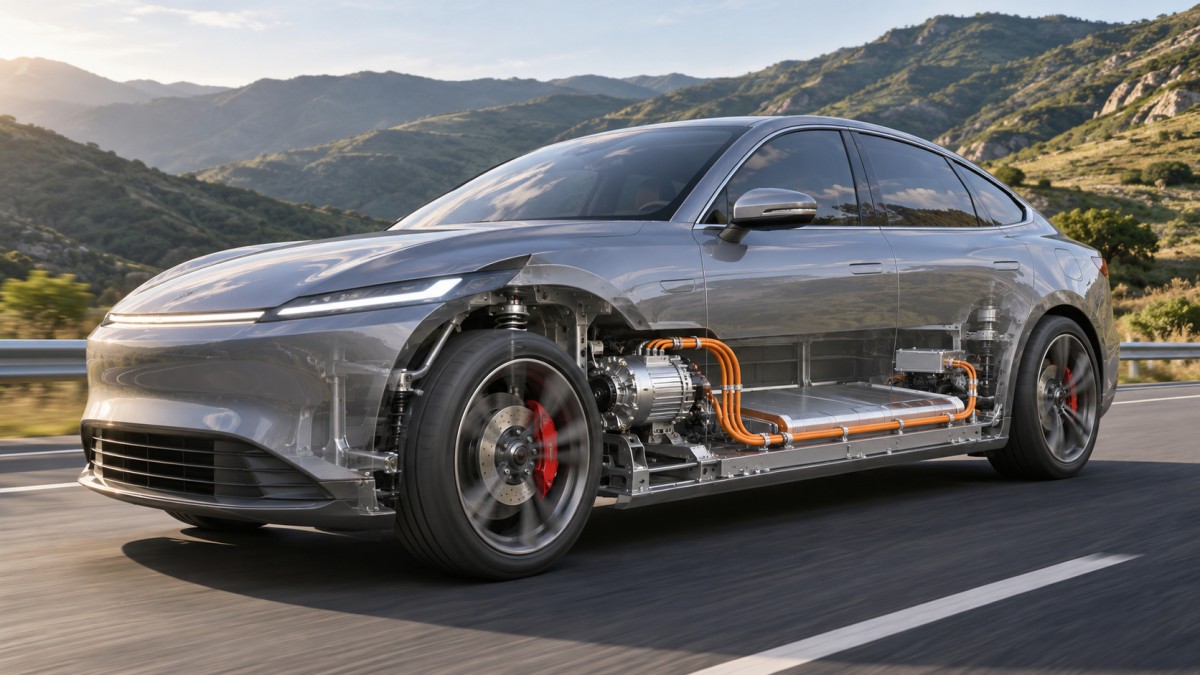
When an electric or hybrid vehicle slows down, its auto systems can turn part of the vehicle’s motion back into electrical energy. The drive motor acts as a generator, creating resistance at the wheels while sending power through an inverter toward the battery. Conventional friction brakes provide additional stopping force whenever regeneration is insufficient or unavailable.
That balance changes during a drive. A nearly full or cold battery may accept less charging power, while slippery pavement or a sudden stop can limit how much braking the motor should provide. Understanding these constraints helps explain why the same vehicle can feel different when the accelerator is released or the brake pedal is pressed.
From moving vehicle to stored energy
During acceleration, the battery supplies electrical power to an inverter, which controls the motor that turns the driven wheels. During regenerative braking, the energy flow largely reverses: the moving wheels drive the motor, the motor generates electricity, and the inverter conditions that electricity for the high-voltage battery.
The motor’s generating action produces torque that opposes wheel rotation. Drivers experience this as deceleration, either when lifting off the accelerator or when pressing the brake pedal, depending on the vehicle’s calibration. The recovered electrical energy can be stored for later propulsion or used to supply electrical loads, subject to the vehicle’s control strategy.
Recovery is never complete. Energy is lost in the tires, drivetrain, motor, power electronics and battery; aerodynamic drag and rolling resistance also slow the vehicle without charging it. Friction brakes convert some of the remaining kinetic energy into heat. On a downhill route, regeneration can additionally recover part of the gravitational potential energy lost as the vehicle descends.

Only wheels connected to an operating electric machine can provide motor-based regeneration. A vehicle with an electric drive unit on one axle, for example, still needs another way to brake the other axle. Some all-wheel-drive designs can distribute regenerative torque between electric machines, but the available distribution depends on their hardware and control limits.
How regenerative and friction braking work together
The brake pedal generally communicates a requested deceleration to a supervisory controller. That controller determines how much braking can come from the motor and how much must come from the hydraulic friction brakes. The precise architecture varies: some vehicles use an electrically controlled brake actuator, while others rely on different arrangements to coordinate the two sources.
During a gentle stop, the controller may favor regeneration because the requested deceleration falls within the motor and battery’s available limits. Press the pedal harder and the system adds friction braking. In an emergency stop, achieving stable, effective deceleration takes priority over recovering energy.
This coordination is often called brake blending. A well-calibrated system aims to give the driver a predictable response even as the regenerative contribution changes. The pedal does not necessarily correspond to a fixed proportion of motor and friction braking: the allocation can change within a single stop as speed, grip and battery acceptance change.
What happens near a complete stop?
At very low wheel speeds, regenerative braking becomes less effective or may be phased out by the controller. Friction brakes normally complete the stop and hold the stationary vehicle when required. Even in a vehicle with one-pedal driving, the driver must understand the model’s behavior: some systems can bring the car to rest under certain conditions, while others allow it to creep or require the brake pedal.
One-pedal driving changes the accelerator-release request; it does not eliminate the brake pedal or guarantee a particular stopping distance. The driver still needs the conventional brakes for rapid stops and whenever the available regenerative deceleration is inadequate.
Conditions that change energy recovery
The motor may be capable of generating more power than the battery can safely accept at a given moment. The battery management system therefore communicates charging limits to the vehicle controller, which adjusts regenerative torque accordingly. Several conditions can cause those limits—or the available wheel torque—to change:
- High battery state of charge: As the battery approaches its upper charge limit, charging power can be restricted. A full battery may leave little or no capacity for regeneration until charge is used or conditions change.
- Battery temperature: A cold battery may have a reduced charging-power limit. High temperatures can also trigger restrictions to protect the battery. Thermal management can change the available limit over time.
- Vehicle speed: Motor speed and torque limits affect available regenerative braking. Low-speed transitions are especially noticeable because friction braking usually takes over before the vehicle stops.
- Road grip: Regen applies braking torque to driven wheels. On a low-traction surface, stability and anti-lock controls may reduce or interrupt that torque to help maintain wheel control.
- Electrical and mechanical limits: The motor, inverter, battery and drivetrain each have operating limits. The lowest applicable limit constrains the amount of regeneration available at that moment.
A driver might notice reduced lift-off deceleration shortly after a full charge or on a cold start. That can be normal, particularly if a dashboard indicator shows limited regeneration and the feel changes as the battery warms or its state of charge falls. It should not be confused with a guarantee that every change in braking response is harmless.
Traction, stability and the limits of motor braking
Regenerative braking must be coordinated with anti-lock braking and electronic stability functions. If a driven wheel approaches lockup on snow, ice or loose material, the control system can reduce motor braking torque. The friction brakes can also be individually controlled to support stability, depending on the vehicle’s brake architecture.
Grip can vary from one side of the road to the other. Because an electric machine may apply torque through a differential or other shared driveline components, the system cannot assume that maximum regeneration is appropriate at every wheel. Controllers must account for the available hardware and the vehicle’s response.
For the driver, the practical implication is straightforward: use a speed and following distance appropriate to the surface, and be prepared for a different response when lifting off the accelerator. Selecting a stronger regeneration setting does not create extra tire grip.
Long descents: battery capacity matters
A long downhill section presents a different constraint from a short stop. The vehicle may generate electrical power continuously, and the battery must have both sufficient charge headroom and an acceptable charging-power limit to receive it. Starting a descent with a nearly full battery can reduce regeneration; battery temperature and system limits also affect what remains available.
When regeneration is restricted, the vehicle relies more heavily on friction brakes or other vehicle-specific controls. Friction brakes dissipate energy as heat, so sustained braking on a steep descent can raise brake temperatures. Drivers should follow the vehicle manufacturer’s guidance for downhill operation and should not assume that a selected regeneration level will remain available throughout the descent.
Some vehicles display a regeneration limit or change their indicated braking capability. The meaning of those indicators varies, so the owner’s manual is more reliable than a generic rule about a particular symbol or bar on the dashboard.
Reading efficiency claims without overstating the benefit
Regenerative braking can reduce the energy needed for a trip by returning some otherwise dissipated energy to the electrical system. Its value is usually more apparent when driving involves repeated deceleration, because there are more opportunities to recover energy. A steady-speed journey offers fewer such opportunities, although hills and traffic still affect the result.
Recovery should not be treated as a reason to accelerate unnecessarily and brake later. Each conversion has losses, so avoiding needless acceleration and allowing the vehicle to coast when appropriate can use less energy than accelerating and then regenerating. Whether coasting or lift-off regeneration is more suitable depends on traffic, road conditions and the distance available to slow down safely.
Regeneration can also reduce friction-brake use, but it does not make those brakes maintenance-free. Friction components remain necessary for strong stops, low-speed operation, parking and situations where regeneration is limited. Infrequent use can leave certain components susceptible to corrosion or sticking; inspection and maintenance intervals should follow the vehicle manufacturer’s instructions.
When a change in braking feel deserves investigation
A temporary reduction in regeneration can be expected under the battery and traction conditions described above. Begin by checking the instrument display and considering whether the battery is cold, near its upper charge limit or operating on a slippery surface. Compare the behavior only under similar conditions; a low-speed stop and a moderate-speed lift-off are not equivalent tests.
Do not treat reduced braking performance as a regeneration-setting issue. A brake warning, an unusually long stopping distance, a soft or sinking pedal, pulling to one side, or persistent grinding warrants prompt attention under the vehicle’s safety guidance. Avoid deliberate road tests that could put other people at risk. A qualified technician can check diagnostic messages, friction-brake condition and relevant electrical-system faults using the manufacturer’s procedures.
Standards and verification boundaries
Regenerative braking sits within the vehicle’s overall braking and electrical safety design; it is not assessed solely by measuring energy sent back to the battery. Depending on the market and vehicle category, applicable requirements can cover service-brake performance, stability-related functions, electric powertrain safety and electromagnetic compatibility. The exact obligations depend on jurisdiction, vehicle classification and the type-approval or certification route.
For a technical comparison, ask which operating conditions were used to establish a reported regeneration figure: battery state of charge and temperature, vehicle speed, deceleration demand, road conditions and whether the figure describes peak power or energy recovered over a defined drive cycle. Peak regenerative power alone does not establish stopping performance or real-world energy savings. Confirm the applicable standard and its edition against the relevant regulatory or standards body rather than assuming that one braking test covers every vehicle and market.
Next:Already The FirstGot questions about this topic or seeking best practices for your project? Drop us a line below, and let Hengda Engineering's experts help you out.
Recommended News
- 00
0000-00
How do auto systems handle regenerative braking?Discover how auto systems use regenerative braking to recover energy, blend friction brakes, and adapt to battery and road conditions. - 00
0000-00
How to verify an ISO certified factory's certificateVerify an ISO certified factory with confidence. Check certificate status, scope, accreditation and manufacturing sites to reduce supplier risks before you buy. - 00
0000-00
How to verify a baby products manufacturer's safety testingVerify a baby products manufacturer's safety testing with practical steps for checking lab reports, product compliance, and production traceability before you order.
000000-00
{item.title}{item.description}Search News
Industry Portal
Hot Articles
- How do auto systems handle regenerative braking?Discover how auto systems use regenerative braking to recover energy, blend friction brakes, and adapt to battery and road conditions.
- India Plans Mandatory Energy Storage for State UtilitiesIndia's mandatory energy storage proposal could reshape state utility procurement. Explore potential opportunities and the key details suppliers should watch.
- How to verify an ISO certified factory's certificateVerify an ISO certified factory with confidence. Check certificate status, scope, accreditation and manufacturing sites to reduce supplier risks before you buy.
Popular Tags