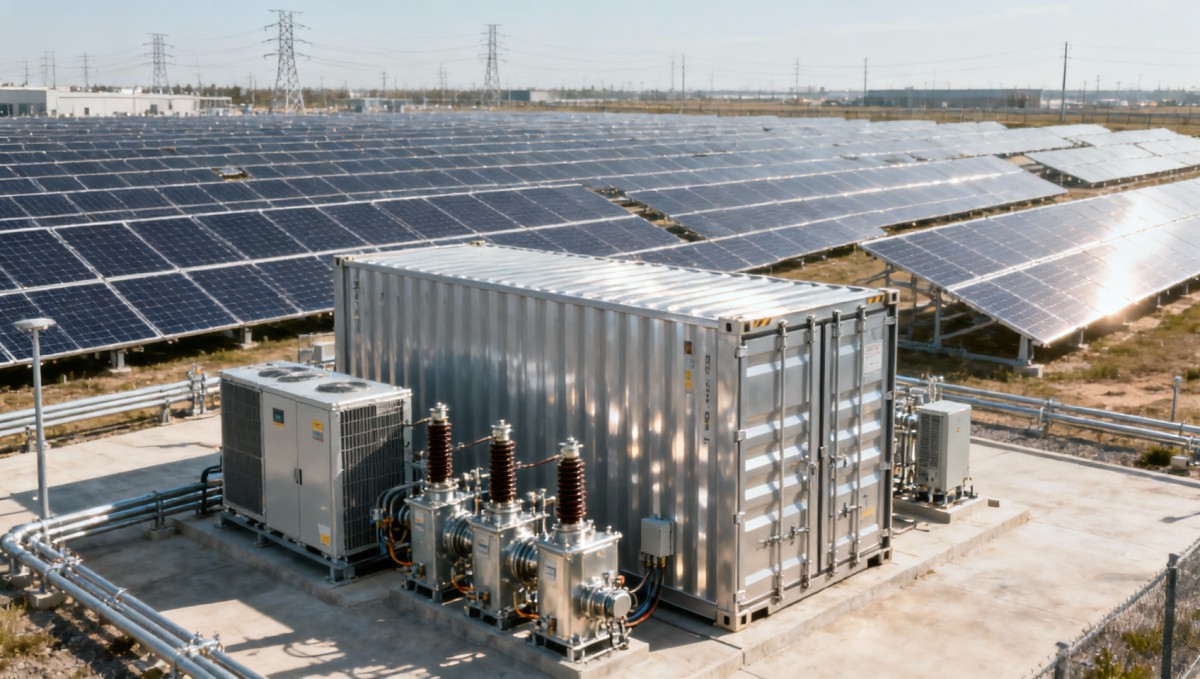
Why PV Efficiency Gains Do Not Always Improve Project Returns
auth.Dr. Liang ChenTime
Apr 17, 2026Click Count
Higher PV Efficiency can boost output, but it does not automatically improve project returns. In today’s Energy Transition, investors and operators must weigh IEEE Compliance, UL Certification, and IEC Standards alongside ESS Benchmarking, Energy Resilience, Grid Modernization, Electrification, and Decarbonization goals. Understanding how these factors interact is essential for making technically sound, financially resilient infrastructure decisions.
For utility-scale developers, EPC teams, and microgrid operators, the gap between module efficiency and actual project returns is often wider than expected. A module that is 1.0% to 2.5% more efficient on a datasheet can improve energy density, yet the full project economics still depend on capex, balance-of-system design, thermal behavior, degradation, grid constraints, curtailment, and O&M complexity.
This is especially relevant in large portfolios where financing assumptions are tight, land costs vary by region, and compliance requirements influence procurement. In many cases, better returns come not from chasing the highest nameplate efficiency, but from selecting hardware and system architecture that improve bankability, uptime, safety, and dispatch flexibility over 20 to 30 years.
From the perspective of G-EPI, a data-driven engineering evaluation is more useful than a single headline metric. PV efficiency must be assessed together with ESS integration, grid modernization objectives, certification pathways, and real operational conditions. That broader view is what separates technically impressive projects from financially resilient infrastructure.
Why Higher PV Efficiency Does Not Equal Higher Project Value

PV efficiency measures how much solar irradiance a module converts into electricity under standard test conditions. It is a useful indicator, but it is only one variable in the project return equation. Internal rate of return, levelized cost of energy, debt service coverage, and long-term availability depend on multiple technical and commercial factors that a module datasheet does not fully capture.
A 23% efficient module may reduce land use or array footprint compared with a 21% efficient option, but the premium may not be justified if the site already has sufficient area. If land cost is low, for example below a typical range of 2% to 5% of total project capex, the economic value of extra efficiency may be smaller than the value of lower module cost, easier installation, or lower inverter clipping risk.
In hot climates, higher efficiency modules may still underperform financial expectations if their temperature coefficient, backside heating profile, or soiling sensitivity increases operating losses. A system that delivers 1.5% more DC output under laboratory assumptions can lose much of that advantage when ambient temperatures stay above 35°C for long periods, especially in weak ventilation layouts.
Return metrics are portfolio metrics, not module metrics
Project returns are shaped by financing terms, interconnection limits, construction schedule, and plant controls. If a grid connection caps export capacity at 100 MW AC, adding more efficient modules may increase DC energy potential but not exported revenue unless storage, curtailment management, or load shifting are included. In that case, the value of ESS benchmarking can exceed the value of a small module efficiency gain.
Developers should evaluate at least 4 linked dimensions: module premium, BOS savings, performance under local climate, and revenue capture under actual dispatch constraints. Looking at only module conversion efficiency can distort procurement decisions, particularly in markets with volatile merchant pricing or multi-layer compliance requirements.
Common reasons efficiency gains fail to improve returns
- Higher module price offsets BOS savings, especially when labor rates are moderate and mounting design is already optimized.
- Grid curtailment reduces monetizable output during peak irradiance hours.
- Mismatch, soiling, and thermal losses shrink the theoretical gain from 1% to 2% extra efficiency.
- Insurance, certification, and warranty review take longer for less standardized product selections.
- O&M access can become more difficult when high-density layouts reduce service clearance.
The practical takeaway is clear: efficiency matters most when it solves a system-level constraint such as limited land, structural loading limits, rooftop area scarcity, or a premium interconnection opportunity. Outside those conditions, total project design discipline often matters more than chasing the highest available conversion figure.
The Hidden Cost Drivers Behind PV Project Returns
Many energy transition projects face a familiar trap: procurement teams compare module efficiency, while finance teams later discover that site preparation, cable routing, tracker selection, transformer sizing, and commissioning delays have a larger effect on returns. A bankable project model should separate component efficiency from system economics and quantify where the real value is created.
For example, a module premium of 4% to 7% may be acceptable if BOS savings reach a similar range and yield is stable over 25 years. But if higher-power modules require more careful logistics, tighter mechanical tolerances, or different inverter loading strategies, the savings can erode quickly. This is why experienced operators evaluate design compatibility before they evaluate module headline metrics.
A project in a desert environment, a coastal site, and an industrial microgrid can each justify different optimization priorities. In one case, anti-soiling design and cleaning intervals may dominate. In another, corrosion resistance, insulation integrity, or resilience against voltage fluctuations may matter more than raw efficiency.
Key cost and value variables
The table below shows why project returns depend on more than module efficiency alone. Each factor can shift the outcome by a meaningful amount over a 20-year to 30-year operating period.
The key conclusion is that system constraints determine whether higher efficiency creates economic value. If export, maintenance, thermal performance, or construction risk are not addressed, the project may post stronger technical metrics but weaker financial returns.
Procurement questions that should be asked early
- What percentage of revenue depends on energy exported during already congested hours?
- Will higher power density reduce cabling, foundations, and labor by enough to offset module premium?
- Does the design maintain safe service access, acceptable string behavior, and manageable cleaning routines?
- Are financing, warranty, and certification reviews likely to add 2 to 6 weeks to procurement?
These questions help move the discussion from product marketing to infrastructure performance. For information researchers and plant operators, that shift is essential when comparing technology options across different climates, regulatory regimes, and project scales.
Standards, Compliance, and Bankability Matter as Much as Efficiency
In utility-scale and industrial energy projects, returns are strongly influenced by how equipment performs within recognized technical and safety frameworks. IEEE compliance, UL certification, and IEC standards are not paperwork exercises. They shape interconnection approval, lender confidence, insurance acceptance, commissioning timelines, and long-term operational risk.
A module or inverter with strong efficiency metrics but weak documentation or incomplete testing can delay energization. Even a 30-day delay may materially affect seasonal generation capture, debt drawdown timing, and EPC cash flow. In projects with milestone-based payment schedules, that delay can have a larger financial effect than a 1% efficiency improvement.
This is one reason G-EPI emphasizes cross-sector benchmarking. A PV project does not operate in isolation. Transformers, switchgear, ESS, protective relays, EV charging interfaces, and grid control systems all interact. Compliance alignment across these interfaces reduces rework and improves bankability.
How standards influence return outcomes
The following comparison highlights where standards can affect project economics as directly as hardware efficiency.
The practical lesson is that standards reduce invisible costs. They shorten review cycles, improve confidence among lenders and utilities, and lower the probability of post-installation changes. When project margins are thin, risk reduction is itself a return enhancer.
What operators should verify
- Test reports and certification scope match the intended application, climate, and installation category.
- Grid interface equipment is coordinated across PV, ESS, transformer, and protection settings.
- Documentation packages are complete before factory release, not after site delivery.
- Warranty terms align with expected operating profile, especially where cycling, dust, humidity, or thermal stress are high.
When efficiency is evaluated together with compliance and interoperability, the procurement team can make decisions that are technically robust and financially more defendable. That is particularly important for multi-asset portfolios and mission-critical energy infrastructure.
Where ESS, Grid Resilience, and Modernization Change the Economics
In modern power infrastructure, PV value increasingly depends on how well generation is coordinated with storage and grid flexibility. A project that improves module efficiency by 2% may still deliver weaker returns than a project that pairs slightly lower-efficiency PV with well-sized ESS, strong controls, and a resilient interconnection strategy.
This is because storage can capture midday surplus, reduce curtailment, support ramp control, and improve dispatch during high-price periods. In weak-grid regions or industrial microgrids, energy resilience may matter even more. A few hours of backup capability can protect plant continuity, avoid production losses, and improve the economic case far beyond what higher PV efficiency alone can achieve.
Electrification and decarbonization are also changing load shapes. EV charging clusters, industrial heat electrification, and distributed loads make energy timing more valuable. In these conditions, the highest return often comes from controllable energy delivery rather than the highest instantaneous PV conversion rate.
When storage adds more value than module efficiency
The scenarios below show where ESS can shift project economics more than marginal PV efficiency gains.
The pattern is consistent: where dispatch flexibility, grid quality, or uptime has a monetary value, ESS and system integration frequently outperform a narrow focus on PV efficiency. This is why project benchmarking must extend across PV, storage, chargers, transformers, and controls.
A practical evaluation sequence
- Define whether the project objective is energy yield, peak management, resilience, or multi-service operation.
- Quantify site limits such as export cap, outage cost, land cost, and thermal environment.
- Compare the value of 1% higher PV efficiency against storage duration, control upgrades, and reduced curtailment.
- Model a 10-year, 20-year, and end-of-life operational scenario rather than relying on year-1 production only.
This method supports financially grounded decisions and aligns with grid modernization goals. It also helps operators avoid a common error: optimizing panel performance while underinvesting in dispatch and resilience.
How to Evaluate PV Investments More Accurately
A better evaluation framework starts with the right question. Instead of asking which module is most efficient, ask which system configuration delivers the strongest long-term return under actual operating conditions. That shift changes the decision process from product comparison to infrastructure design.
For information researchers, this means collecting data beyond the module datasheet. For operators, it means checking whether the selected configuration will be easy to install, maintain, monitor, and integrate. For procurement teams, it means balancing capital efficiency, regulatory readiness, and operational resilience in one model.
Five-step selection approach
- Define project constraints: land, export limit, climate profile, outage cost, and target COD window.
- Compare total installed cost per delivered MWh, not module cost per watt alone.
- Review compliance readiness across IEC, UL, IEEE, and utility-specific interconnection expectations.
- Test whether ESS integration improves captured revenue, resilience, or grid support.
- Stress-test the business case under curtailment, thermal derating, degradation, and O&M assumptions.
In many cases, this process reveals that the best-return option is not the most efficient module, but the most balanced system. That may include standard-compliant PV, appropriately sized storage, conservative thermal design, and a control architecture that protects both reliability and revenue.
FAQ for researchers and operators
How much efficiency gain is usually meaningful?
A gain of 0.5% may matter on constrained roofs or premium interconnection sites, while 1% to 2% may be less important on low-cost land with no export bottleneck. The context determines the value.
When should ESS be prioritized over higher module efficiency?
If curtailment risk is frequent, peak pricing is material, or resilience has economic value, storage often produces stronger returns. This is especially true for 2-hour to 4-hour shifting applications and industrial continuity planning.
What is a common mistake in procurement?
A common mistake is using STC efficiency as the lead decision metric without testing temperature behavior, documentation quality, interconnection requirements, or maintenance impact. That can produce an attractive spec sheet but a weaker asset.
How long can compliance and documentation affect schedule?
Depending on jurisdiction and utility review depth, incomplete documentation can add 2 to 8 weeks to approval, procurement, or commissioning. On tightly scheduled projects, that delay can materially affect returns.
For decision-makers navigating decarbonization and electrification, the most resilient approach is to benchmark hardware and system design as a complete operational package. That is the path to better risk control and more durable returns.
Turning Technical Data Into Better Infrastructure Decisions
PV efficiency remains important, but it should be treated as one lever among many. Project returns improve when efficiency gains align with site constraints, compliance readiness, ESS strategy, grid modernization needs, and long-term O&M discipline. Without that alignment, higher efficiency can raise expectations without raising realized value.
For developers, EPC contractors, and operators, the most useful benchmark is not the best module in isolation, but the most reliable and financially coherent system. That means evaluating thermal behavior, standards compliance, dispatch flexibility, resilience outcomes, and lifecycle service burden with the same rigor used to compare output figures.
G-EPI supports this decision process through cross-sector engineering transparency across Solar PV, ESS, EV charging infrastructure, smart grid equipment, and hydrogen-related energy technologies. By comparing hardware and system performance against recognized standards and real operating conditions, stakeholders can make decisions that are more technically sound and less exposed to hidden return erosion.
If you are evaluating PV upgrades, storage integration, or grid-resilient energy infrastructure, now is the right time to move beyond single-metric procurement. Contact G-EPI to discuss benchmarking priorities, request a tailored technical comparison, or explore solutions that improve both energy performance and financial resilience.
Recommended News
- 00
0000-00
What determines the bulk price of TOPCon solar panels?TOPCon solar panel bulk price factors explained: compare specifications, volume, warranties, certifications, logistics, and risk for smarter solar procurement. - 00
0000-00
China Sets Mandatory Efficiency Rules for PV Exports in New National StandardsChina’s new mandatory PV efficiency standards could reshape exports, compliance, and buyer screening for TOPCon, HJT modules, and inverters. - 00
0000-00
How to Evaluate a TOPCon Solar Panel Wholesaler for Quality, Pricing, and Supply StabilityTopcon solar panel wholesaler evaluation guide: learn how to verify module quality, compare real landed pricing, and secure stable supply before choosing a reliable partner.
000000-00
{item.title}{item.description}Search News
Industry Portal
Hot Articles
- How to prioritize upgrades in a power grid resilience roadmapBuild a power grid resilience roadmap that prioritizes risk reduction, critical loads, and cost-effective upgrades. Discover how to sequence investments and validate results.
- Which connector do you need for a level 2 charger in North America?Level 2 charger North America guide: choose the right J1772 or NACS connector, check AC adapter compatibility, and avoid costly mistakes before you buy.
- How to size manufacturing equipment for a new production lineManufacturing equipment sizing made practical: calculate real capacity, identify bottlenecks, balance buffers, and choose scalable assets for a reliable new production line.
Popular Tags