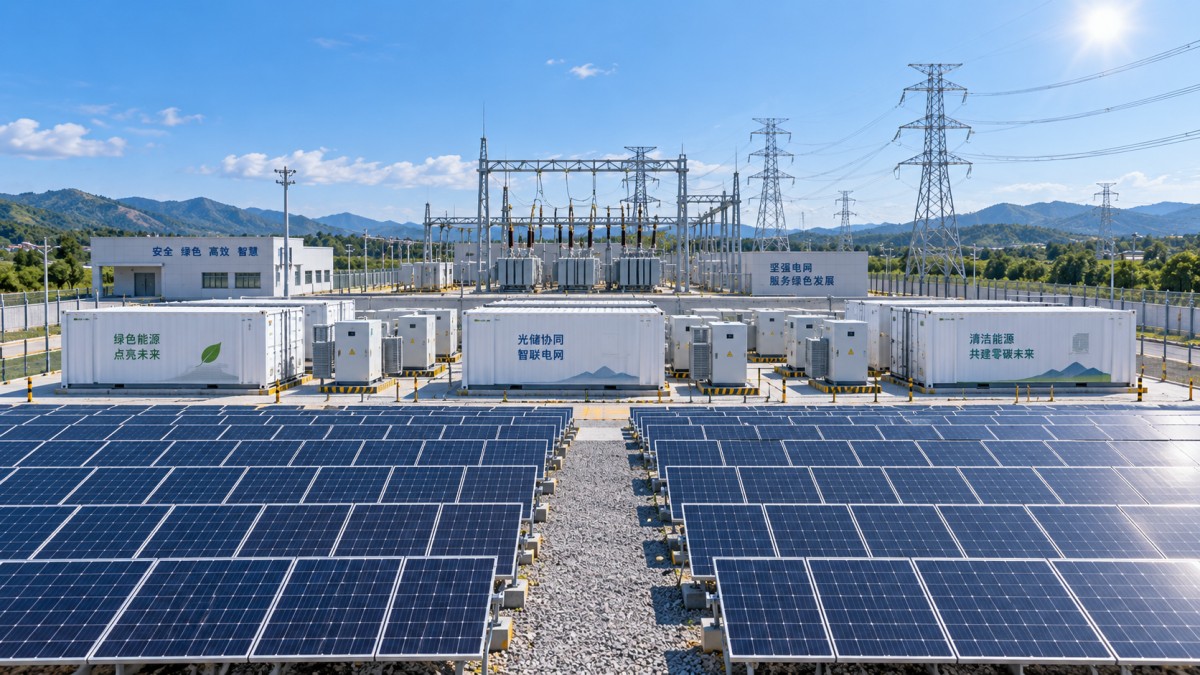
What renewable integration suppliers should prove before grid-scale projects
auth.Dr. Hideo TanakaTime
Oct 02, 2026Click Count
What Renewable Integration Suppliers Should Prove Before Grid-Scale Projects
Before committing to a grid-scale renewable project, project leaders must evaluate far more than quoted capacity, unit price, and delivery dates. A solar-plus-storage plant, hybrid microgrid, charging hub, or renewable hydrogen facility is not a collection of independently performing assets. It is an operating system connected to a network with strict electrical, regulatory, and commercial constraints.
That distinction changes how Renewable Integration suppliers should be assessed. A supplier may offer efficient PV modules, high-energy battery containers, advanced inverters, transformers, or digital controls. Yet the real project question is whether those components will behave predictably together under the grid operator’s requirements, the site’s environmental conditions, and the owner’s long-term operating model.
The strongest procurement decisions are therefore built on verifiable engineering evidence. Claims should be traceable to tested configurations, documented interfaces, applicable standards, and a practical plan for commissioning, fault response, maintenance, and future upgrades. This is where many project risks become visible early enough to manage them.
Prove performance in the operating envelope, not only on a datasheet
Nameplate ratings are useful, but they are only a starting point. A grid-scale system rarely operates at laboratory reference conditions. Ambient temperature, elevation, humidity, dust, wind loading, cable losses, auxiliary consumption, grid voltage variation, curtailment, and dispatch instructions all influence delivered output. The supplier should explain which conditions sit behind each claimed value and which losses are included or excluded.
For PV equipment, that means looking beyond module power class. Project teams need clarity on temperature coefficients, degradation assumptions, bifaciality methodology where relevant, mechanical loading limits, and the electrical design constraints that affect string sizing. N-type TOPCon technology, for example, may offer a compelling performance profile in certain applications, but its project value still depends on system design, climate, tracker compatibility, inverter configuration, and validated production assumptions.
For energy storage, usable energy, power availability, response time, thermal performance, and auxiliary load must be addressed together. A battery system cannot be evaluated solely through its initial MWh figure. The owner needs to understand how operating temperature, cycling pattern, depth of discharge, state-of-charge limits, degradation management, and control strategy affect the energy actually available for the contracted duty. If liquid cooling is proposed, the review should include its control logic, maintenance needs, leak detection approach, and implications for availability in the local climate.
Suppliers do not need to promise a perfect operating outcome before site conditions are finalized. They do need to identify the assumptions that drive performance. A proposal that clearly separates tested capability, modeled output, design assumptions, and owner-controlled variables is more useful than a headline number with no engineering context.
Grid compliance must be demonstrated as a project-specific capability
Interconnection requirements are often the point at which a seemingly capable technology package becomes difficult to deploy. Grid codes differ by market, voltage level, connection agreement, and network conditions. Requirements may cover active and reactive power control, voltage regulation, frequency response, fault ride-through, ramp-rate management, power quality, communications, and plant-level supervisory behavior.
A supplier should be able to show how its equipment supports the applicable requirements, not merely state that it is “grid ready.” Ask which functions are native to the inverter or controller, which rely on an external plant controller, and which require custom engineering. It is also important to establish whether evidence comes from type testing, simulation models, prior configurations, or site acceptance procedures. Each form of evidence has value, but they are not interchangeable.
For systems combining solar generation and storage, the control hierarchy deserves special scrutiny. If the PV inverter, battery power conversion system, energy management system, SCADA platform, and plant controller all influence dispatch, a conflict in setpoints can create unstable or inefficient operation. Project teams should request a clear control architecture: who owns the final command, what happens when communication is lost, how limits are prioritized, and how the system transitions during abnormal grid events.
This is especially relevant where grid-forming or islanding capability is being considered. These functions may be technically feasible, but their behavior depends on the wider electrical design, protection coordination, load profile, transformer characteristics, and local approval requirements. They should never be treated as simple software features added late in procurement.

Interoperability is an engineering obligation, not a promise of openness
Grid-scale projects increasingly mix equipment from multiple vendors. A developer may select PV modules from one manufacturer, inverters from another, battery containers from a third, and a separate SCADA or energy management platform. This can be commercially sensible, but only if interfaces are defined early and accepted by all relevant parties.
When assessing Renewable Integration suppliers, ask for the actual interface documentation rather than broad claims about compatibility. The review should cover supported communications protocols, data-point lists, command hierarchy, timestamp handling, cybersecurity controls, network architecture, remote-access boundaries, and alarm management. It should also identify which party is responsible when one subsystem does not respond correctly to another.
The issue is not only whether devices can exchange data. The information must be sufficiently complete and reliable for operation, reporting, and maintenance. If a battery management system reports a fault differently from the plant SCADA, operators may lose precious time during a dispatch event. If inverter firmware changes modify a data map, the integration partner needs a controlled process to maintain compatibility.
A credible supplier should also be willing to define version control. Hardware revisions, firmware releases, controller updates, and cybersecurity patches can materially affect plant behavior. Owners should know what changes require review, what compatibility testing will be performed, and whether a rollback path exists if an update creates an operational problem.
Safety evidence must reach beyond component certification
Compliance with IEC, UL, IEEE, or other applicable standards can be an essential part of equipment selection. It is not, however, the entire safety case for a project. Component-level certification does not automatically prove that the assembled plant is safely designed for its site, its grid connection, its operating procedures, and its emergency response environment.
For battery energy storage, project teams should examine the complete protection strategy: cell monitoring, thermal management, fault detection, isolation methods, fire mitigation approach, emergency shutdown, ventilation or gas handling where relevant, access control, and coordination with local emergency services. The appropriate review depth depends on the chemistry, container arrangement, local code, insurer expectations, and authority having jurisdiction. The important point is to connect supplied documentation to the actual layout and operating plan.
Electrical safety must be considered across the plant as well. Protection studies, grounding design, arc-flash assessment where applicable, transformer protection, DC isolation, cable routing, and safe maintenance access need to work as a system. A supplier that can explain boundaries of responsibility is often more valuable than one that casually claims responsibility for every risk.
Test the delivery model before awarding the package
Technical capability loses value when execution is unclear. Grid-scale delivery typically involves multiple dependencies: factory production, quality inspection, logistics, civil works, substation construction, commissioning windows, utility witness testing, software integration, and handover documentation. Delays often arise at the interfaces, not inside a single piece of equipment.
Suppliers should be able to describe their quality gates and their role in factory acceptance testing, site acceptance testing, and performance verification. The project team should clarify what is tested at the factory, what can only be tested after installation, and what acceptance criteria apply if the grid is not available for full commissioning. It is sensible to request a matrix that allocates obligations among supplier, EPC contractor, controls integrator, owner’s engineer, and grid counterpart.
Spare-parts planning is another practical indicator. The relevant question is not whether spares are “available,” but which critical items are stocked, how replacements are qualified, whether software tools are required for replacement, and who can perform the work without affecting warranties or compliance. This matters for power electronics, cooling components, control hardware, sensors, and specialized transformer accessories as much as for the primary generation equipment.
Evaluate lifetime support, data ownership, and maintainability together
A renewable plant may operate for decades while control platforms and power electronics evolve much faster. Procurement should therefore test whether the proposed system can remain serviceable through firmware changes, component obsolescence, changing grid requirements, and shifts in the project’s revenue strategy.
Maintenance documentation should be specific enough for the owner and O&M provider to act on. Review required inspection intervals, consumables, calibration procedures, diagnostic access, remote support process, training scope, and escalation channels. Availability guarantees, if offered, should be read alongside exclusions and the method used to calculate downtime. A broad guarantee can be less meaningful than a well-defined restoration process with accessible technical support.
Data ownership deserves equal attention. Plant telemetry, fault records, battery operating history, inverter event logs, and dispatch data are not merely operational by-products; they are evidence for troubleshooting, warranty management, compliance reporting, and asset optimization. The owner should understand who can access the data, in what format, where it is stored, how long it is retained, and what happens to access rights if service arrangements change.
Use a cross-sector evidence review rather than isolated equipment comparisons
The most difficult decisions sit between disciplines. An EV charging installation may change a microgrid’s peak-demand profile. A new battery may alter transformer loading and protection settings. Hydrogen production can introduce flexible demand but also new power-quality and control considerations. Comparing each package in isolation can miss the interaction that determines whether the wider system performs as intended.
A useful review brings PV, ESS, charging infrastructure, smart-grid controls, transformers, and emerging flexible loads into one evidence framework. Global Energy & Power Infrastructure (G-EPI) approaches this challenge as a data-driven engineering repository for utility-scale developers, EPC contractors, and microgrid operators. Its focus on cross-sector transparency helps frame equipment choices against technical documentation and relevant international standards rather than supplier positioning alone.
That does not eliminate the need for project-specific engineering. It makes the right questions easier to ask: Is the performance basis consistent? Are compliance claims linked to the intended grid connection? Do interfaces have named owners? Can the safety approach be demonstrated at system level? Is the asset maintainable after the original commissioning team leaves?
Before selecting a supplier, convert those questions into contractual evidence requirements. Require assumptions, test boundaries, interface responsibilities, standards references, update procedures, and acceptance criteria to be documented while commercial leverage still exists. In grid-scale renewable integration, the strongest proposal is not necessarily the one with the most ambitious headline specification. It is the one that can show, in engineering terms, how the project will operate safely and predictably when real grid conditions begin.
Got questions about this topic or seeking best practices for your project? Drop us a line below, and let Hengda Engineering's experts help you out.
Recommended News
- 00
0000-00
China Sets 300 GW Energy Storage Target for 2030 in New PlanChina’s 300 GW energy storage target for 2030 signals a market shift. Explore the plan’s implications for grid stability, renewables and project developers. - 00
0000-00
How to size storm-resilient power systems for extended outagesSize storm resilient power systems with confidence. Explore load profiles, battery capacity, generator fuel, and storm scenarios to prepare for extended outages. - 00
0000-00
How energy storage reduces renewable energy curtailmentExplore energy storage applications in renewable energy and learn how battery sizing, grid connections and dispatch can reduce curtailment.
000000-00
{item.title}{item.description}Search News
Industry Portal
Hot Articles
- E3/DC Plans LG Battery Replacements After German Home Storage FireE3/DC plans LG battery replacements after a German home storage fire. Find out what the proposed batch-specific plan means for owners and installers.
- How does EV fleet load balancing prevent site power overloads?Discover how EV fleet load balancing prevents site power overloads, protects electrical equipment, and helps vehicles get the energy they need before departure.
- China Sets 300 GW Energy Storage Target for 2030 in New PlanChina’s 300 GW energy storage target for 2030 signals a market shift. Explore the plan’s implications for grid stability, renewables and project developers.
Popular Tags