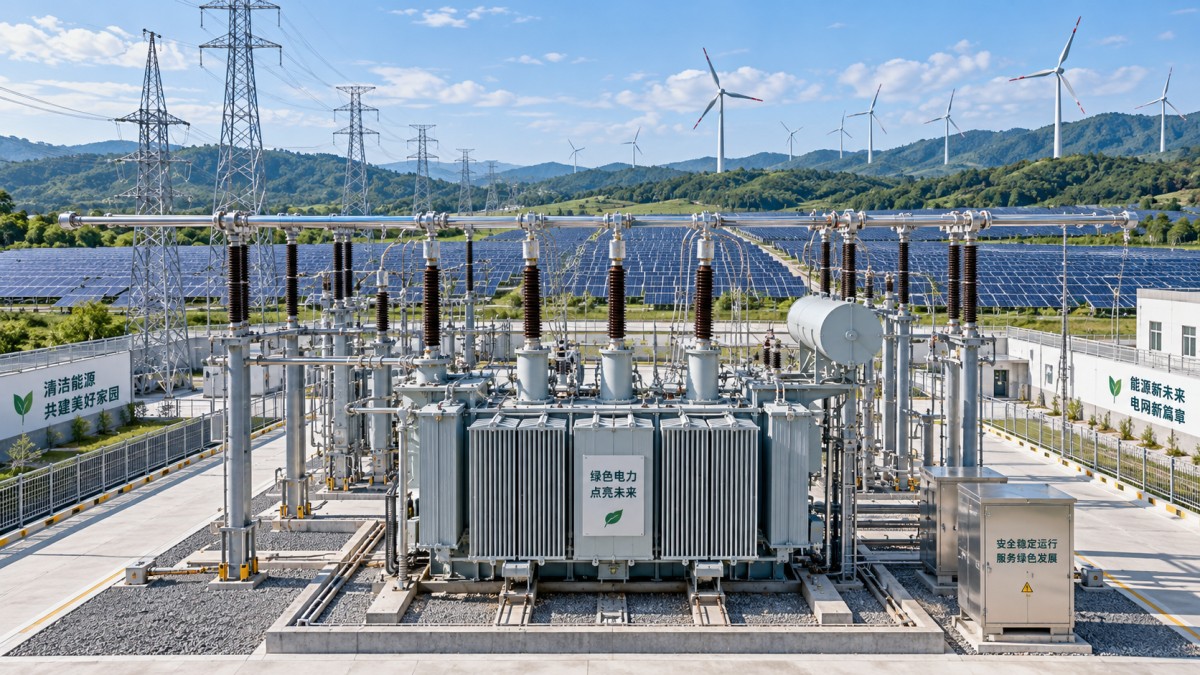
Should Grid Upgrades Come Before New Renewable Generation Investment?
auth.Dr. Hideo TanakaTime
Oct 14, 2026Click Count
Should Grid Upgrades Come Before New Renewable Generation Investment?
Should grid upgrades come before new renewable generation investment? Where network constraints prevent electricity from reaching buyers, usually yes—but that does not mean renewable development should stop until every planned transmission line is finished. The better approach is to identify which upgrades must precede energization, which can run alongside construction, and which may be avoided through better siting or operating arrangements.
For utilities, developers, and EPC contractors, the distinction matters. A technically strong solar or wind project can still face poor economics if its connection is delayed or its output is repeatedly curtailed. Conversely, a major grid expansion can tie up capital without delivering sufficient value if generation, demand, and permitting assumptions do not materialize. Investment sequencing should follow the actual constraint—not a blanket preference for either infrastructure or generation.
“Grid-ready” means more than an available connection point
A nearby substation is not proof that a project can export its intended output. Connection studies may identify transformer loading, voltage-control requirements, protection changes, fault-level limits, or constraints farther upstream. The limiting asset may be several substations away from the proposed site.
There is also a difference between permission to connect and commercially useful access to the network. A project may receive a non-firm connection that allows operation under defined restrictions. That can accelerate delivery, but the financial model must reflect when export will be restricted and how those restrictions interact with electricity prices.
Consider solar generation behind an export-constrained substation. Annual curtailment alone does not describe the commercial risk. If lost production occurs mainly during low-price midday periods, the revenue impact may be manageable. If restrictions also affect contracted delivery periods or higher-value hours, the same curtailed energy volume can cause greater damage. Hourly analysis is more useful than a single annual loss assumption.
When grid-first investment is the stronger choice
Grid upgrades should lead when they are a prerequisite for safe operation or a credible revenue case. Building generation first does not remove a transformer bottleneck, create transmission capacity, or resolve an unacceptable protection arrangement. It can simply leave completed assets waiting for permission to energize.
The case becomes stronger when one upgrade serves several committed projects and an established load requirement. A reinforced transmission corridor or expanded substation may support renewable connections, industrial electrification, and greater resilience. Its value should therefore be assessed across the network, rather than assigned entirely to the first generator seeking access.
However, “grid-first” should not mean approving an oversized expansion against an optimistic project pipeline. Developers can withdraw, permitting can fail, and forecast demand can shift. Shared infrastructure needs credible commitment milestones, clear cost-allocation rules, and a plan for what happens if participating projects change.
Transformer procurement deserves particular attention. Delivery schedules depend on rating, design, factory capacity, testing, transport, and site readiness. A headline equipment lead time is not a usable commissioning date. Technical specifications, interface responsibilities, acceptance tests, and installation requirements must be settled early enough to support the construction schedule.
When generation can reasonably move first
Generation-first investment can be sensible where studies confirm usable network headroom, required connection works are limited, and the project does not depend on speculative reinforcement. Existing capacity should not sit unused merely because a broader regional upgrade is still being planned.
Projects serving on-site demand offer another route. Solar supplying an industrial facility may reduce net imports without requiring unrestricted export capacity. But the design must account for weekends, shutdowns, seasonal production changes, and minimum daytime demand. An annual consumption total can conceal hours when generation exceeds load and export restrictions become binding.
Phased construction can also work: commission the capacity supported by the present connection, then expand after reinforcement. The trade-off is practical rather than theoretical. Multiple mobilizations, revised permits, equipment compatibility, and changes to construction contracts can erode the benefit of starting early.
The important test is whether the first phase stands on its own commercially. If its economics depend on a later upgrade arriving exactly on schedule, it is not genuinely independent of grid investment.
Compare the constraint, not just the investment category
These choices are not permanent labels. Another generator entering service, a major customer closing, or a revised network operating arrangement can change the available headroom. Investment decisions need a defined study baseline and a process for handling material changes.

Storage and smart-grid controls can help—but only with the right bottleneck
Battery energy storage can absorb renewable output during constrained periods and export it later. That makes it a potential alternative to some reinforcement, not a universal substitute for transmission. If the network remains constrained throughout the discharge window, the battery has nowhere useful to send its energy.
Sizing therefore starts with the constraint profile. Power rating determines how quickly the battery can absorb excess generation; usable energy capacity determines how long it can do so. State-of-charge management, degradation, conversion losses, auxiliary consumption, and operating reserves affect the result. A battery committed to other services may not have enough available capacity when curtailment occurs.
Connection arrangements matter too. Charging from the grid may create a separate import requirement, while co-located charging depends on the electrical configuration and permitted operating modes. A storage revenue model should not assume unrestricted charging and discharging unless the connection agreement supports both.
Smart-grid measures address different limitations. Dynamic line ratings may release additional capacity when measured conditions permit. Volt/VAR control, improved monitoring, and coordinated protection can support more effective network operation. None should be credited as firm replacement capacity without examining availability, communications failures, fallback settings, and operator acceptance.
Flexible demand can contribute as well. Managed EV charging or electrolyzer operation may absorb renewable production locally, but only within customer requirements and equipment constraints. A flexible load is valuable when it is actually available during constrained hours—not simply because it appears in a planning diagram.
The financial comparison needs a common boundary
Comparing the cost of a solar plant with the cost of a substation upgrade is rarely enough. One produces energy; the other enables delivery and may serve multiple users. The decision needs a common boundary covering connection costs, delivered energy, timing, operating risk, and the useful life of the assets.
For the generation option, include financing during delays, curtailed output, commissioning obligations, and contractual exposure where applicable. For the grid option, include permitting uncertainty, construction outages, maintenance, and the risk that expected users do not arrive. For storage or flexible operation, include dispatch restrictions and replacement assumptions.
Avoid counting the same benefit twice. Storage cannot simultaneously eliminate all curtailment and remain fully available for every other revenue opportunity. Similarly, headroom allocated to one project may not remain available to another.
A useful comparison tests three pathways: reinforcement followed by generation; generation under an accepted restricted connection; and coordinated delivery with targeted reinforcement or flexibility. Run each against delayed commissioning, lower demand, and more competing generation. The cheapest base case may be the most fragile investment.
Make the sequence an engineering decision before it becomes a procurement decision
G-EPI’s cross-sector engineering focus is relevant because these decisions sit between technologies. PV performance, storage dispatch, transformer capability, EV charging demand, and hydrogen production loads all affect the same network. Optimizing each asset separately can produce a system that performs poorly at its connection point.
Equipment benchmarking against applicable IEC, UL, or IEEE requirements helps establish a technical baseline, but standards compliance does not prove site-specific compatibility. Applicable requirements vary by equipment and jurisdiction. Network studies, validated models, protection coordination, and commissioning tests remain necessary.
Before authorizing major expenditure, resolve four questions: What precisely limits delivery? Who owns the remedy? Which milestone proves readiness? What happens commercially if that milestone slips? Those answers should be reflected in procurement, construction, and connection agreements—not left as assumptions between separate teams.
Grid upgrades should come first where they unlock safe, economically credible renewable operation. Generation should proceed where usable capacity already exists or a restricted operating model remains viable. In many projects, development should run in parallel, while construction commitments follow verified infrastructure milestones. The practical rule is simple: do not finish a plant whose route to market still depends on an unresolved network promise.
Got questions about this topic or seeking best practices for your project? Drop us a line below, and let Hengda Engineering's experts help you out.
Recommended News
- 00
0000-00
China Sets 300 GW Energy Storage Target for 2030 in New PlanChina’s 300 GW energy storage target for 2030 signals a market shift. Explore the plan’s implications for grid stability, renewables and project developers. - 00
0000-00
How to size storm-resilient power systems for extended outagesSize storm resilient power systems with confidence. Explore load profiles, battery capacity, generator fuel, and storm scenarios to prepare for extended outages. - 00
0000-00
How energy storage reduces renewable energy curtailmentExplore energy storage applications in renewable energy and learn how battery sizing, grid connections and dispatch can reduce curtailment.
000000-00
{item.title}{item.description}Search News
Industry Portal
Hot Articles
- How does EV fleet load balancing prevent site power overloads?Discover how EV fleet load balancing prevents site power overloads, protects electrical equipment, and helps vehicles get the energy they need before departure.
- China Sets 300 GW Energy Storage Target for 2030 in New PlanChina’s 300 GW energy storage target for 2030 signals a market shift. Explore the plan’s implications for grid stability, renewables and project developers.
- How to size storm-resilient power systems for extended outagesSize storm resilient power systems with confidence. Explore load profiles, battery capacity, generator fuel, and storm scenarios to prepare for extended outages.
Popular Tags