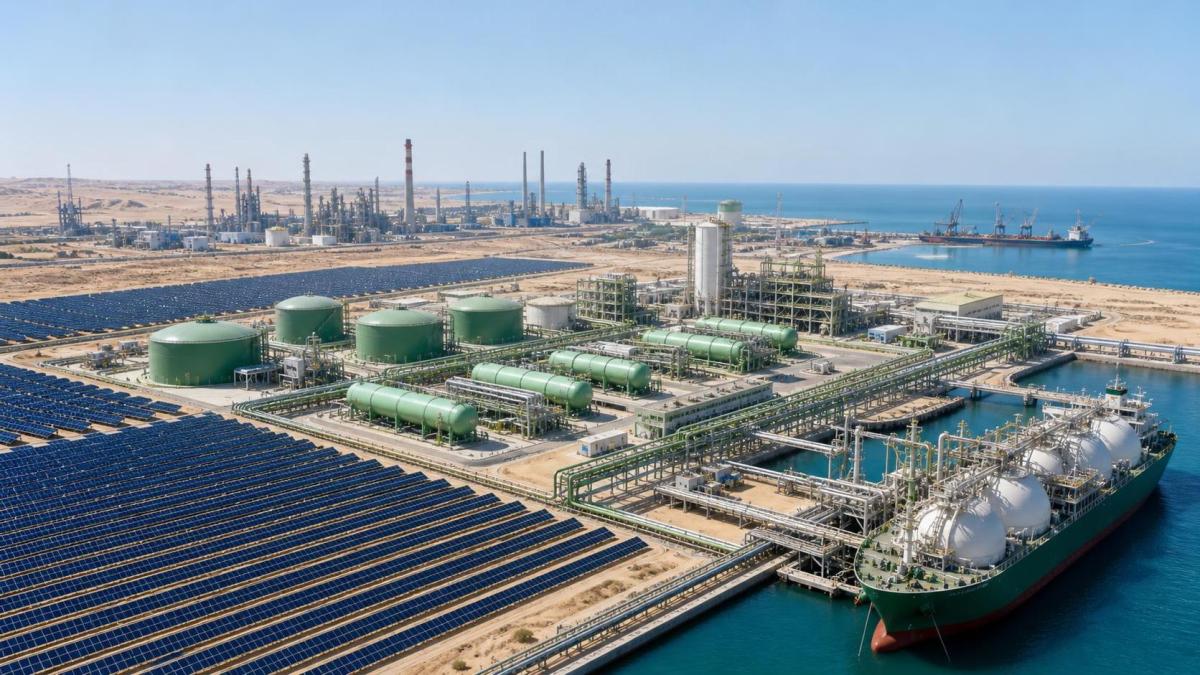
When does green fuel make economic sense in the Middle East
auth.Robert GreenTime
Aug 20, 2026Click Count
A familiar planning problem comes up in boardrooms across the region: a team agrees that low-carbon fuel should be part of the long-term strategy, but the moment procurement or investment discussions begin, the conversation stalls. One group focuses on abundant solar resources and expected future demand. Another points to uncertain offtake, grid constraints, water access, transport costs, and the risk of locking into the wrong technology path too early. The result is often not rejection, but hesitation.
That hesitation is understandable. In the Middle East, green fuel can look compelling on a slide and fragile in a spreadsheet at the same time. If you are evaluating project partnerships, supply contracts, site options, or equipment pathways, the real question is not whether green fuel is important. It is when it becomes commercially sensible enough to justify procurement commitments, infrastructure sequencing, and internal capital allocation. For many teams looking at Green Fuel Middle East opportunities, the answer only becomes clear after the decision is reframed around use case, power structure, logistics, and operational discipline rather than ambition alone.
Where decision-making usually goes wrong
A common mistake is to start with production technology and only later work backward to economics. Teams compare electrolyzers, storage options, or export routes before they have defined the fuel’s actual role in the portfolio. Is the target product hydrogen for industrial consumption, ammonia for export, e-fuel for a harder-to-abate segment, or a blend strategy tied to specific decarbonization obligations? Each path changes the cost structure in ways that matter more than many first-stage evaluations admit.
Another issue is that buyers often treat low-cost renewable generation as the entire story. In the Middle East, access to strong solar conditions is a major advantage, but it does not automatically create viable green fuel economics. Conversion losses, storage duration, backup power arrangements, transmission access, water treatment, compression or liquefaction, port availability, and contract design can quickly determine whether a project is bankable, stranded, or simply premature.
When this is missed, procurement teams may compare suppliers or project concepts using headline production assumptions that do not reflect actual delivered cost. That is where many internal debates become unproductive. People are arguing over a number that has not yet been built on the right boundary conditions.
The more useful question: economic sense for whom, and for which application?
Green fuel in the Middle East does not become economic in one universal moment. It becomes economic first in specific situations where alternatives are structurally weak, carbon constraints are material, and energy supply can be secured at scale with reasonable utilization. That is why some projects look promising while others remain speculative even within the same country or industrial zone.
If you are making a procurement or investment decision, it helps to separate four common demand scenarios:
- Industrial feedstock replacement where a plant already uses hydrogen or hydrogen-derived inputs and decarbonization pressure is rising.
- Export-oriented production where the economics depend heavily on shipping, derivatives, port handling, and long-term offtake certainty.
- Power-system balancing or seasonal storage, which often sounds attractive but can be difficult to justify unless local grid conditions and storage duration needs are unusual.
- Mobility or specialized fuel markets where buyer willingness to pay may be stronger, but volumes and infrastructure may still be immature.
Once the application is clear, the cost discussion becomes more honest. A fuel may make sense as a strategic industrial input long before it makes sense as a broad commodity play. It may also be viable for export in derivative form while remaining unattractive for local direct use, or the reverse. This is why a single regional narrative about green fuel often causes confusion.
The turning points that usually make or break the business case
In practice, several conditions tend to determine whether a project moves from “interesting” to “commercially defendable.” None of them should be reviewed in isolation.
1. Low-cost electricity is necessary, but consistency matters almost as much
Because electricity is central to green hydrogen and related fuel pathways, most teams start there, and they should. But the cheapest nominal renewable electricity is not always the most useful. A project with very low energy cost but weak utilization can struggle if equipment sits idle too often or if the system requires expensive oversizing. The better question is whether the power supply profile supports acceptable asset productivity across the full chain.
That means looking beyond resource quality to curtailment risk, grid connection terms, hybrid generation options, storage integration, and whether flexible operation will harm downstream economics. A procurement decision made only on installed generation price can be misleading if it ignores conversion plant operating patterns.
2. Offtake structure matters more than broad market enthusiasm
Many discussions about the future of Green Fuel Middle East development are driven by expectations of international demand. That may be directionally true, but procurement decisions cannot rely on general optimism. Green fuel starts making economic sense when demand is anchored by contract terms that reduce volume uncertainty, pricing ambiguity, or delivery risk.
For decision-makers, this usually means asking hard questions early: Is there a defined buyer? Does the product specification match the buyer’s actual process? Is the customer paying for carbon attributes, reliability, delivered molecule cost, or strategic supply security? Can the offtake support infrastructure investment timing? If these answers are weak, even an otherwise attractive production concept may be too early.

3. The chosen molecule changes the viability window
Hydrogen, ammonia, methanol, and other green fuels do not share the same infrastructure burden or market readiness. Direct hydrogen use may avoid some conversion losses, but handling and transport can be more difficult depending on distance and end use. Ammonia can improve transportability and fit some export strategies, but it introduces its own conversion, safety, and end-use challenges. Synthetic fuels may align better with certain sectors, yet they often require more complex inputs and processing steps.
This is where many teams improve their judgment by stopping the search for a universal “best” fuel and instead mapping the fuel to the supply chain they can realistically support. A project that looks expensive in one form may become more rational in another if storage, transport, and buyer integration are more practical.
4. Infrastructure readiness often decides timing
The economics of green fuel are rarely limited by generation and conversion equipment alone. Water supply and treatment, land configuration, interconnection, storage tanks, loading facilities, road or pipeline access, and permitting sequence all affect cost and schedule. In parts of the Middle East, strong strategic positioning exists, but infrastructure readiness varies sharply by site.
This is why projects near industrial clusters, export corridors, or existing energy infrastructure may reach economic logic sooner than remote sites with better theoretical renewable resources. A procurement team comparing offers should be careful not to overvalue raw resource potential while undervaluing execution friction.
A more grounded way to evaluate project readiness
When teams are under pressure to move quickly, they often ask for a simple threshold: at what electricity price, carbon value, or offtake price does green fuel work? It is a reasonable question, but not enough for a responsible decision. A more practical approach is to test whether the project is robust across a small set of operating realities rather than optimized for a single perfect assumption.
That means reviewing the project under different utilization levels, delivery obligations, storage durations, and infrastructure delays. It also means asking whether the equipment path has been benchmarked against credible engineering standards and whether the integration assumptions are realistic. In this stage, data transparency is more useful than aggressive forecasts. Evaluations grounded in technical comparability across hydrogen systems, power conversion, storage, and grid interface tend to produce better procurement decisions than high-level market narratives.
For that reason, many decision-makers now rely on cross-sector technical review rather than assessing the fuel project in isolation. The interaction between solar PV performance, energy storage behavior, transformer and smart grid requirements, and hydrogen process equipment can materially change levelized cost and reliability. A project may look attractive at the molecule level and still underperform because the electrical backbone was not examined with enough rigor.
When the economics usually start to look reasonable
Although every project is different, green fuel in the Middle East usually starts to make stronger commercial sense when several conditions align at once.
One is when the fuel serves a high-value or hard-to-abate application where alternatives are limited and carbon intensity matters in purchasing decisions. Another is when the project has access to scalable renewable power with a workable operating profile rather than just a low advertised generation cost. A third is when transport and handling are matched to the chosen product instead of treated as a downstream detail. Finally, economic logic improves when the buyer, site, and infrastructure timing are coordinated early enough to avoid stranded intermediate investments.
Notice what is not on that list: vague future demand, isolated pilot enthusiasm, or the assumption that regional renewable strength solves everything. Those factors may support strategic interest, but they do not by themselves justify procurement commitments.
When waiting may be the better commercial decision
There are also cases where restraint is the smarter move. If the project depends on multiple unconfirmed incentives, if water and grid access remain unresolved, if the offtake is more aspirational than contractual, or if the chosen technology stack has not been compared on a like-for-like engineering basis, then waiting can protect capital without closing the door on later entry.
Delaying does not have to mean doing nothing. In many organizations, the most useful next step is a structured readiness assessment: define the target fuel application, map the electrical and infrastructure dependencies, compare technology pathways against relevant international engineering standards, and test the economics under realistic operating conditions. That process often reveals whether the opportunity is genuinely early-stage, or simply poorly framed.
Practical signals to watch before issuing procurement commitments
If you are approaching a supplier engagement, site shortlist, or early investment memo, a few signals tend to separate maturing opportunities from still-fragile ones.
Look for alignment between fuel type and buyer requirement, not just buyer interest. Look for evidence that renewable generation, storage behavior, and grid interface have been considered together rather than as separate packages. Look for a logistics plan that reflects the actual movement of the product, including storage, conversion, and loading constraints. And look for evaluation methods built on verifiable technical benchmarks rather than promotional assumptions.
This is where independent engineering repositories and cross-technology benchmarking can be genuinely useful. In sectors like hydrogen and green fuel, decision quality improves when procurement teams can compare core hardware and infrastructure assumptions against recognized standards and adjacent system requirements, from PV and ESS performance to transformer and grid integration considerations. Not because this removes uncertainty, but because it narrows the range of avoidable mistakes.
So when does green fuel make economic sense in the Middle East? Usually not at the moment the idea becomes politically attractive, and not simply where solar potential is strongest. It starts to make sense when a specific use case, a realistic power structure, practical infrastructure, and a credible offtake path line up closely enough that the delivered fuel cost and operational risk can be defended under real operating conditions. For procurement-minded decision-makers, that is the point where green fuel stops being a regional headline and starts becoming a serious commercial option.
Recommended News
- 00
0000-00
When hydrogen energy systems make sense for long-duration backup powerHydrogen energy systems for backup power deliver resilient multi-day autonomy, low local emissions, and reliable continuity when batteries or diesel fall short. - 00
0000-00
Which green fuel technologies fit high-temperature industrial heat?Green fuel technologies for industry: compare electrification, hydrogen, renewable fuels, and hybrid systems for reliable high-temperature heat. - 00
0000-00
When does green fuel make economic sense in the Middle EastGreen Fuel Middle East: Learn when green fuel becomes commercially viable in the region, from power costs and offtake to infrastructure, logistics, and real procurement timing.
000000-00
{item.title}{item.description}Search News
Industry Portal
Hot Articles
- What determines the solar tracker price for utility-scale projects?Solar tracker price for utility-scale projects depends on steel, site conditions, controls, logistics, installation, and lifecycle value. Learn how to compare proposals wisely.
- Which machinery parts wear fastest in solar tracker drive systems?Machinery parts in solar tracker drive systems wear fastest at slew drives, bearings, motors, and couplings. Discover warning signs and maintenance tips.
- How grid monitoring systems improve outage response in the Middle EastDiscover how grid monitoring systems Middle East utilities use to locate faults faster, prioritize critical loads, and improve outage response across complex power networks.
Popular Tags